You cannot beat a good read, and “No Dig Organic Home & Garden” recently joined my bookshelf. I asked the co- authors – Charles Dowding and Stephanie Hafferty , if I could write about their publication . They replied that is fine Sally ” its good to be asked !”
In fact it has hardly been on the shelf since, and is generally found in the greenhouse, being read as i’m having a coffee break, it is a great read.

The content, explanation, format and imagery is super clear. I have become a no dig convert, and wanted to share what my garden looks like now, and how it has changed (and benefited) in a very limited period of time.
My no dig learning curve .
I don’t use pesticides, and my garden is beautiful, floriforous and healthy. Through choosing to garden in a natural and pesticide free way, visiting wildlife keep pest and disease to a minimal level throughout the year. There was a cabbage white incident this year – but more of that later.
I felt I was instantly off to a good start, as no dig is an organic approach.
My garden is not a show garden, it is a living, breathing oasis. If some of the flowers have insect created holes in their foliage and flowers every now and then – it really does not affect how I feel. I truly love my garden.
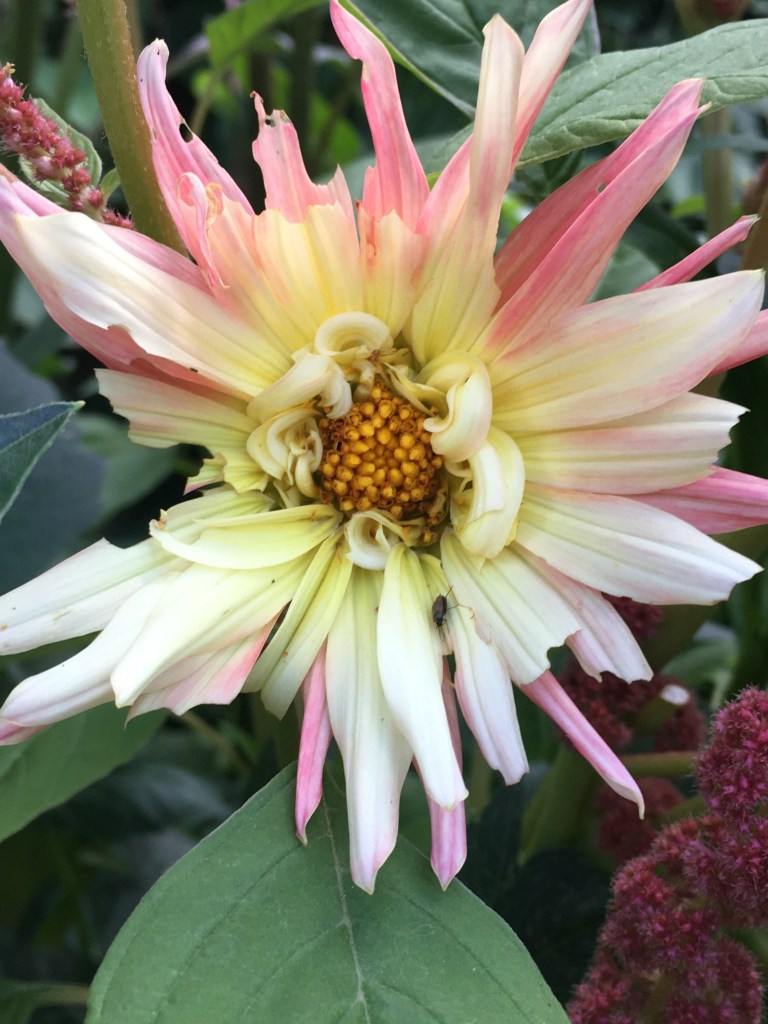
I spend the vast majority of my working week weeding, digging and disturbing the soil in customers gardens, and I have wanted to get away from this at home. For years, I have been using well rotted manure, and home made compost to improve the soil structure in customers gardens, but I was also generally turning the soil to dig it in.
I wasn’t exactly sure of the benefits of no dig, apart from the fact that intrinsically it didn’t feel the right thing to be doing quite so much digging. I knew I was going to be fascinated in “no dig” – even before I had started reading the book.
I have not dug in my garden for over 6 months now, and I am finding that there are tangible differences to the health and growth of my garden.
I have become far more aware of the benefits of mycorrhizal fungi, which I now understand, naturally occurs in nearly all soils. This fungi plays a vital role in supporting a plants health through attaching and growing onto, and then into plants roots. Mycorrihizal fungi In effect form a secondary root network system, which works its way through wider areas of soil, and in so allows the plants roots to take up water and essential nutrients for healthy growth via the fungi.
Digging, would in effect, break up this beneficial underground fungi system, and lead to a reduction in a plants access to water and essential nutrients. This makes a great deal of sense to me.
Also, the more you dig, the more dormant weed seeds you bring to the surface, that will generally germinate. They are competitive in taking up up water and nutrients with your crop. I now hoe them out ( rather than dig) or if they are small annuals I will hand weed them gently out, and put them onto the compost heap.
I have focussed on mulching out weeds in various ways, from using organic matter to cardboard, underlay, plastic sheeting and fake turf. I would say, the majority of my time this year, has really been preparing the ground for next year crops. Really any produce this year has been a considerable bonus.
Uptil 2020, I would have described myself predominantly as a flower grower. I have grown salad crops for many years, but decided in late winter that I was going to try and grow a wider range of food for my family. This book has proved to be the perfect gardening companion.
My only down point, is that I wish I had started my no dig gardening project last winter – rather than in late spring. I am really happy with amounts of my food crop achievements, and my flower borders have never looked better !

My no dig year ( May – late summer 2020)
For several years this brick raised bed ( by June) was mainly full of bind weed, ground elder and nettles, and I tended to ” give up” with it, which was a real shame. This year was going to be different, as I was going to be using my new no dig, cardboard and mulching method.

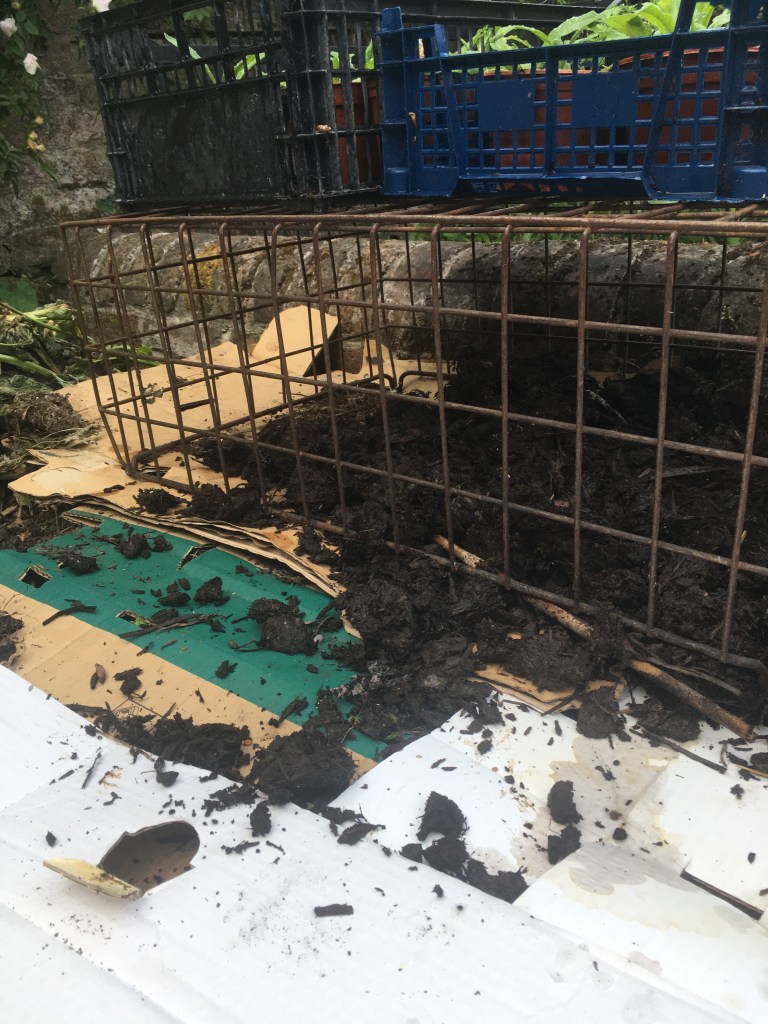
perennials out, cardboard mulch down 
A deep mulch of well rotted horse manure and compost
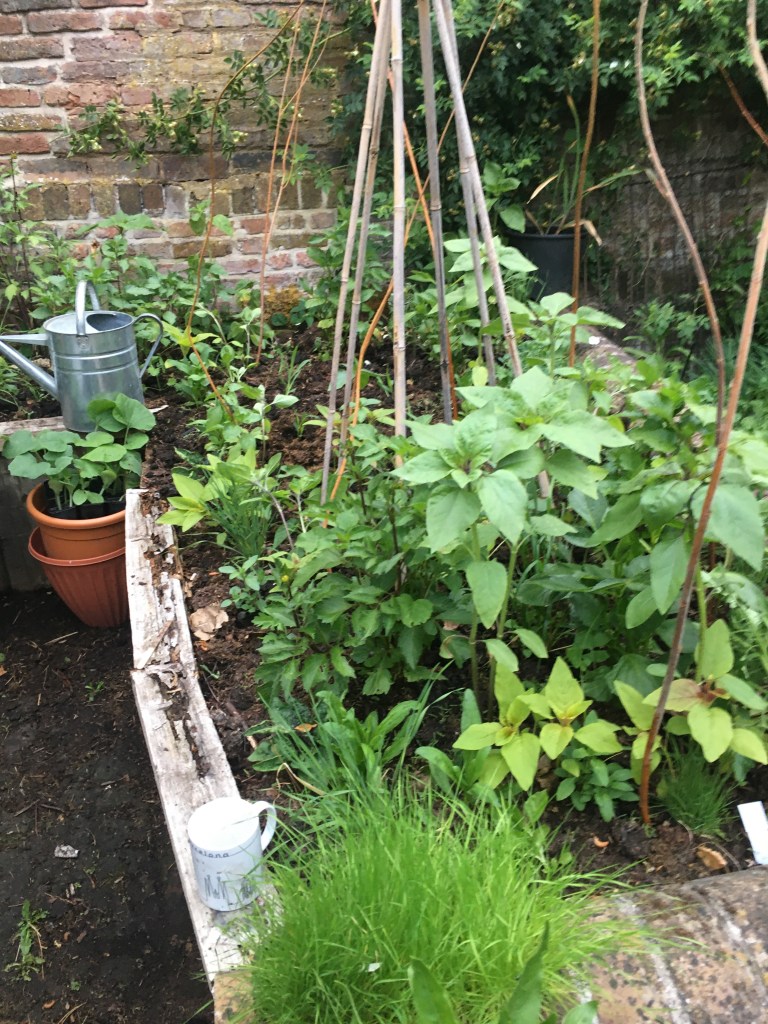
early June 
early August
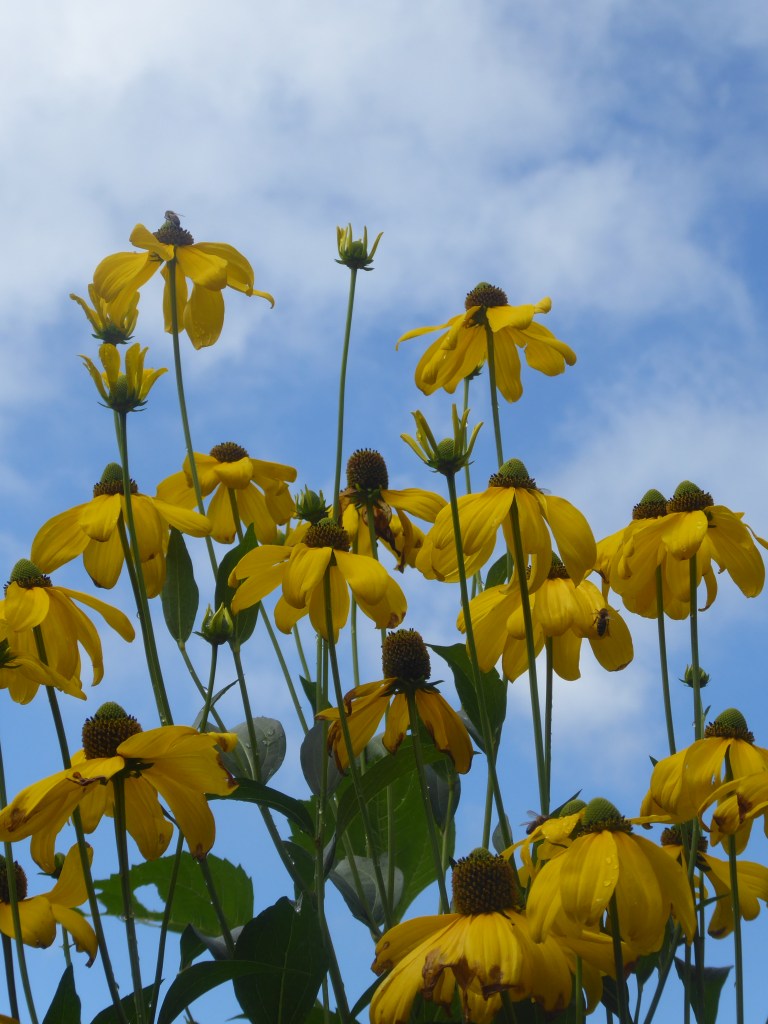
In late May I emptied the brick raised bed out, as all the existing perennials generally became supporting hosts for bindweed. They are now living very happily and particularly weed free in other parts of the garden. Rudbeckia Herbstonne is thriving in its new border.
Rather than attempting to dig out the perennial weeds, I put a double layer of cardboard down, plus a 20 cm layer of well rotted horse manure and home made compost down. I replanted with dahlias, sunflowers, amaranathus, climbing courgettes, sweetcorn, and tomatoes.
I watered everything in when planting – which was in early June. The occasional piece of bindweed stem that made it through has been pulled out, and this is the result below . I am so happy with the result.
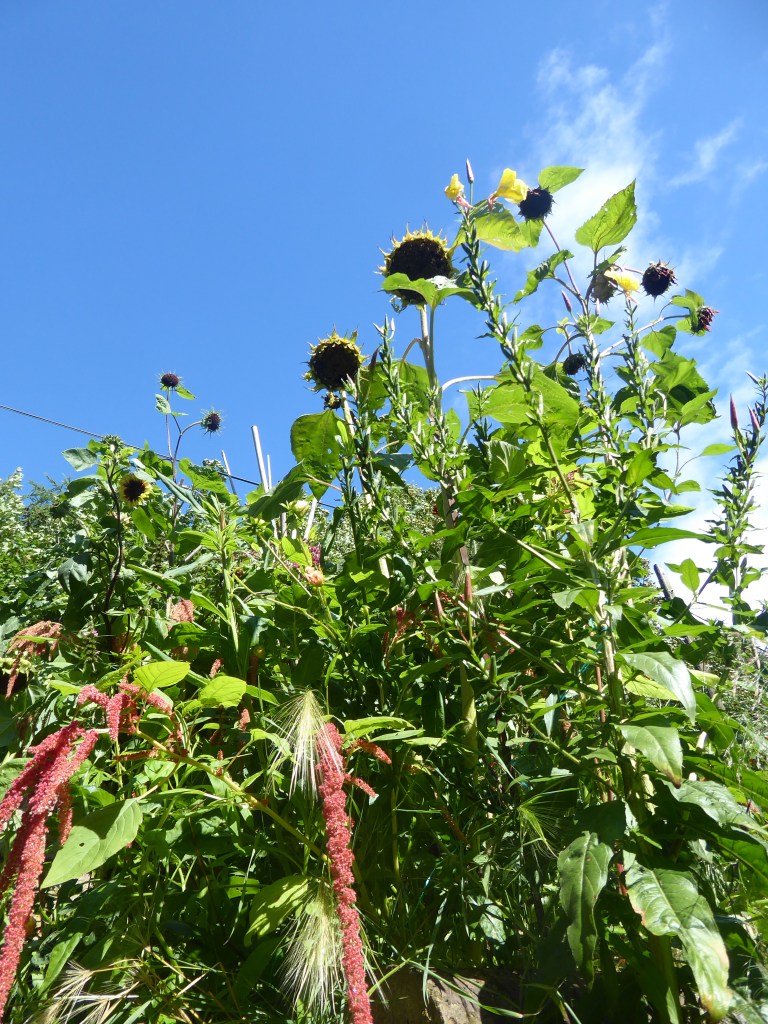
So in this section of my garden – no dig, has massively reduced my weeding, watering, and has dramatically increased the amount of flowers and food grown.
My garden on the whole is hard paved, with plants self seeding between the hard paving, but I do have a couple of raised flower beds. The soil level was pretty low in spring – about 15 cm to where it met the hard paving. I gently lifted the perennials out, and and filled beds to the top, putting around another 20cm depth of well rotted manure and homemade compost on. I then replanted my perennials, and annuals.
There has been limited need for weeding, just the occasional piece of bindweed, and fat hen has been removed and used in salad – I know this came in with the manure, as I have had a really good crop right throughout the garden !
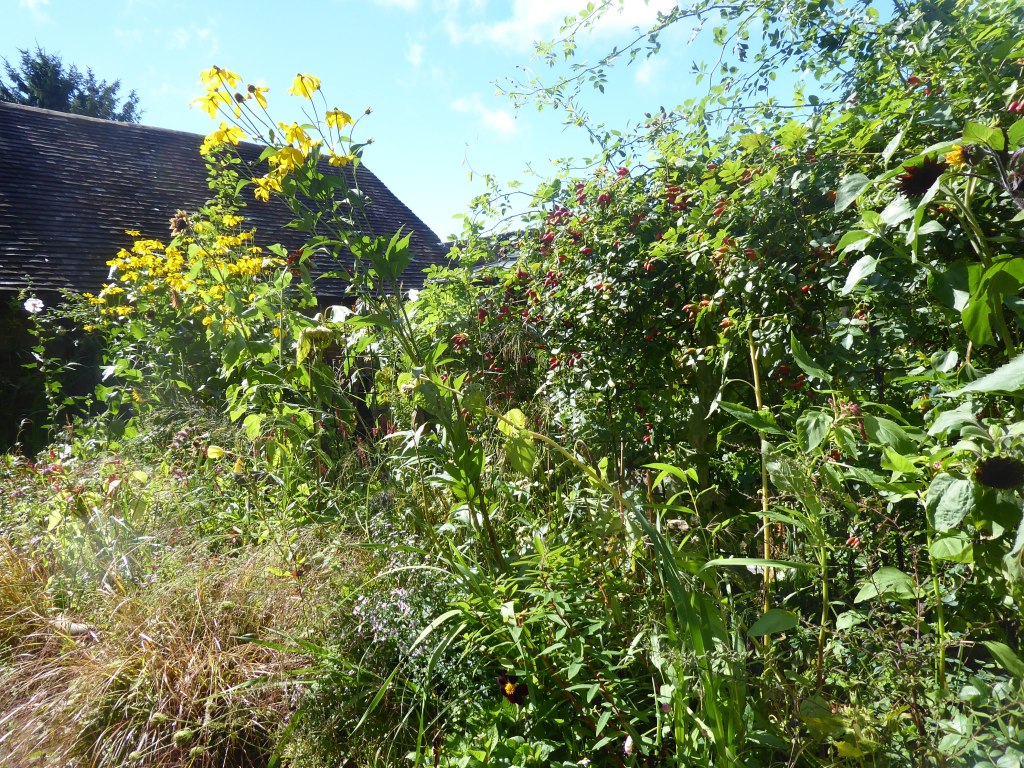
So in this instance, the need for weeding and watering has been really reduced. The border looks so healthy this year, and that is down to the depth of growing media. I am delighted with how it looks.
There is a very small raised veg bed in the garden, which this year was filled with a mix of manure and home made compost . There really were some fantastic early seasonal successes, the spinach, salad, mangetout and broad beans were delicious. I found the no dig book so useful, with information on how and what to grow, inter cropping and follow on planting.
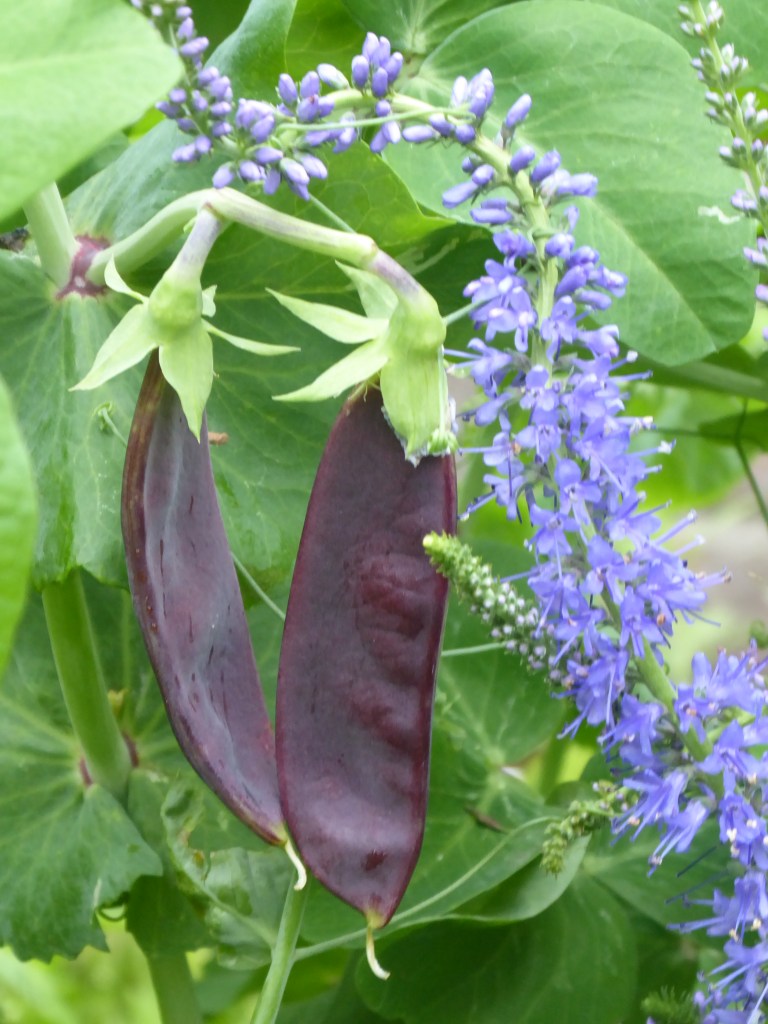
It was a real success, and I would say we were pretty self sufficient in salad crops for almost two months, but then I hit a problem . Please note , this had nothing to do with my new no dig approach . It was all due to ….
The netting I put down to stop the cabbage whites laying their eggs was not fine enough. I think my garden became the top spot for cabbage white butterflies in Shropshire.
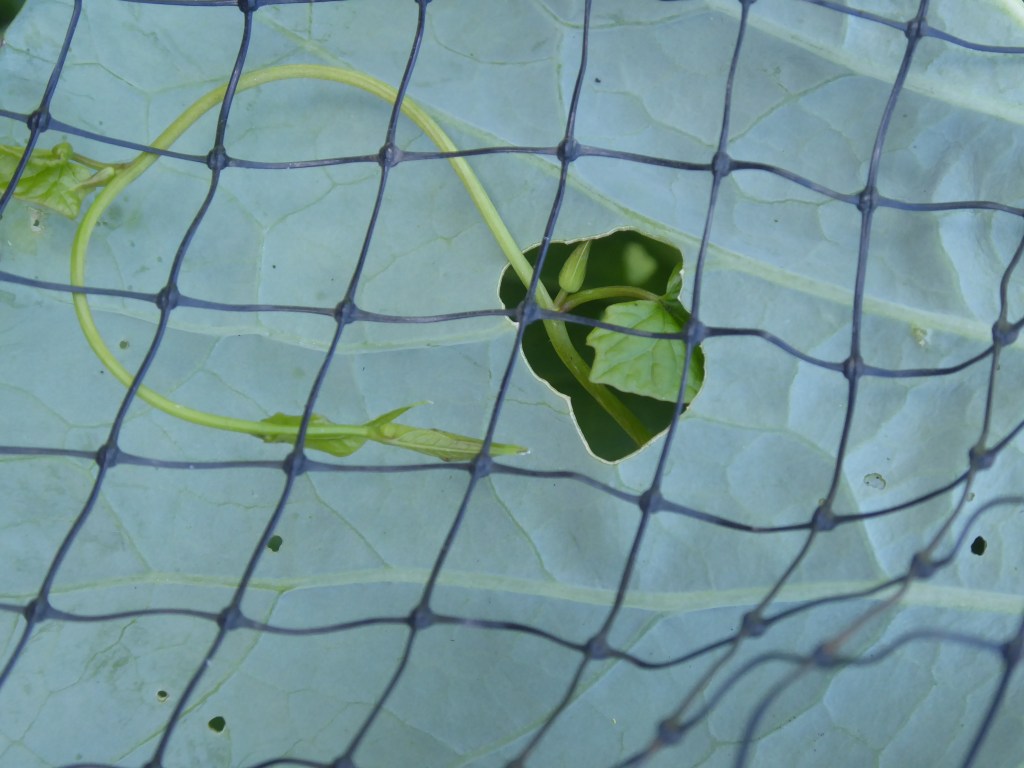
How did I resolve this ? After complete caterpillar decimation I decided to remove the brassicas, and sadly this veg bed came to an almost abrupt productive end. In one section I had already replaced my broad bean crop with leeks, and they are doing well, and I have sown some more spinach and salad into the bed, which I hope to be cropping from in the next month.
It is fair to say I really do like filling my garden with big tall architectural perennials, and I happened to make a visit to my favourite nursery “Wildegoose nursery” and somehow, I ended up with a car full of new plants, and as plant space was short, they ended up in what was the brassica area .

All is not lost for my no dig veg growing, as I do have a new plan.
Several years ago, I was donated this artificial turf. I finally found a use for it.
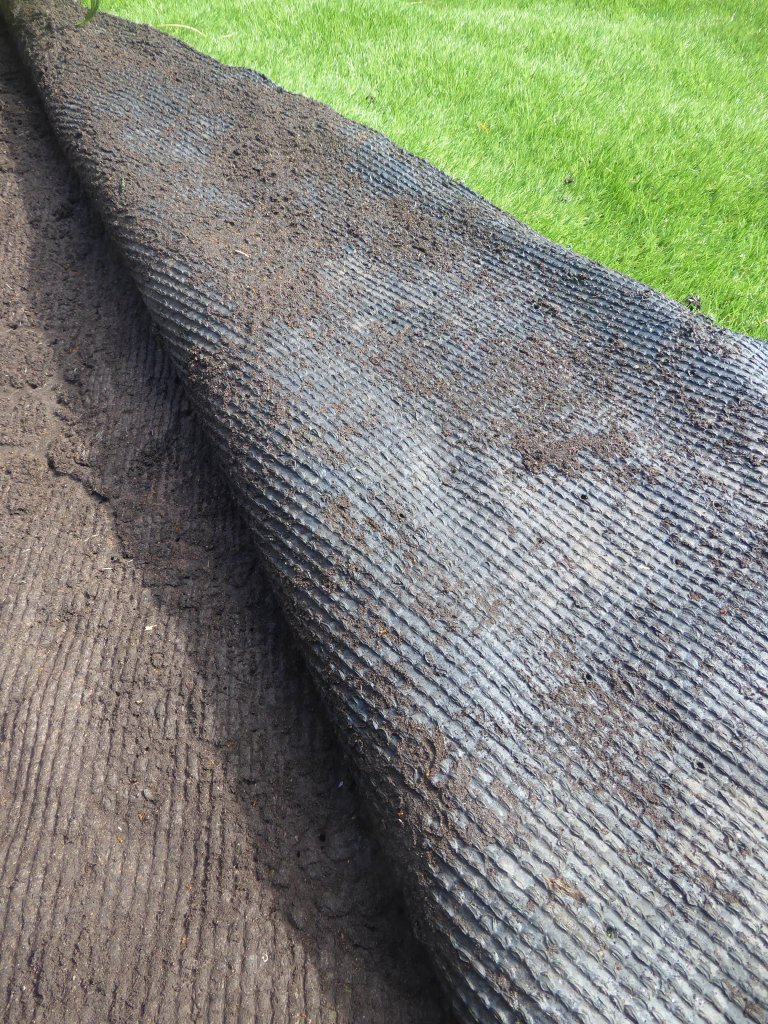
It is a particularly fantastic nettle and ground elder suppressor. I didn’t weed them out, or cut them back, I literally rolled this turf out about 3 months ago. The nettles continued to come through the tiny holes in the plastic but I regularly removed them.
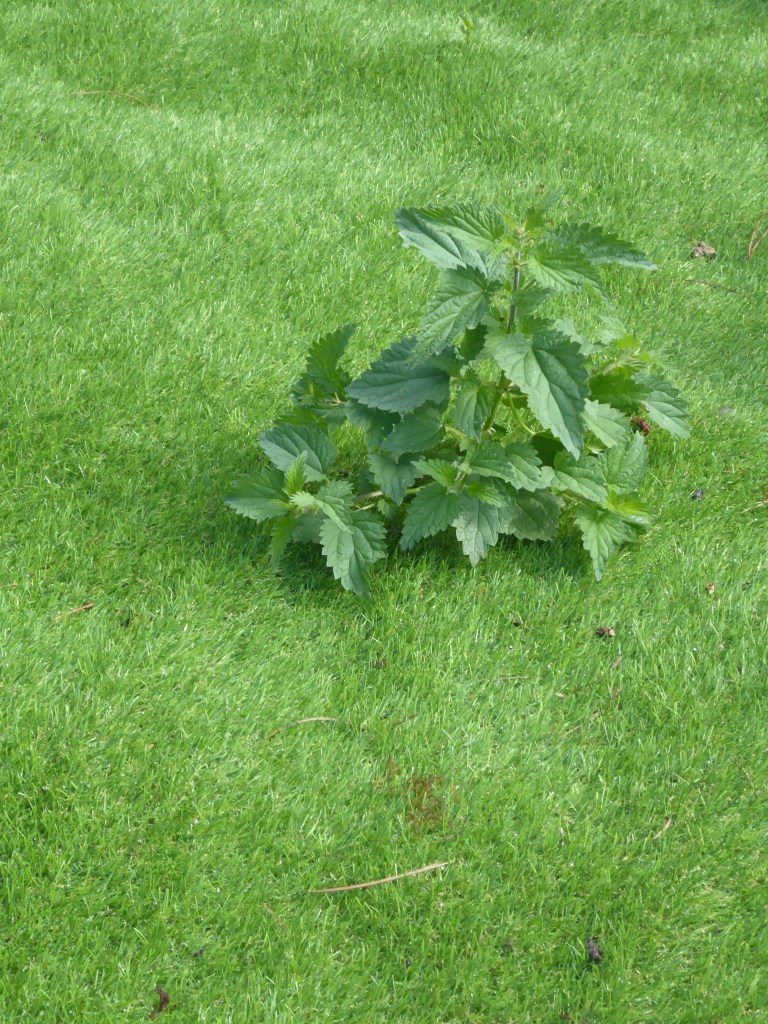
I was intending to roll the turf up in the next couple of weeks, and cover it with a compost mulch, and leave it to over winter, but i’ m now going to plant some donated new brassicas. I think we are past the cabbage white egg laying season ? but to be on the safe side I will be applying a different netting as a deterrence.
We have yet another area of land, that was full of nettles, and brambles. I dug out the brambles, as due to their woody nature, they would have punctured the plastic mulch covering.
For various reasons, it has been a really full on year , and I was late in getting going on this project, but I did manage to cover an area of about 30m2 in all sorts of various layers, from cardboard, to wool carpet underlay to black plastic. What I didn’t do, was, to put a mulch of well rotted manure and home made compost on top of the nettles, and then put the plastic on top. I really just ran out of time. This area is definitely a work in progress, but again I am delighted with the results, even with not mulching underneath.
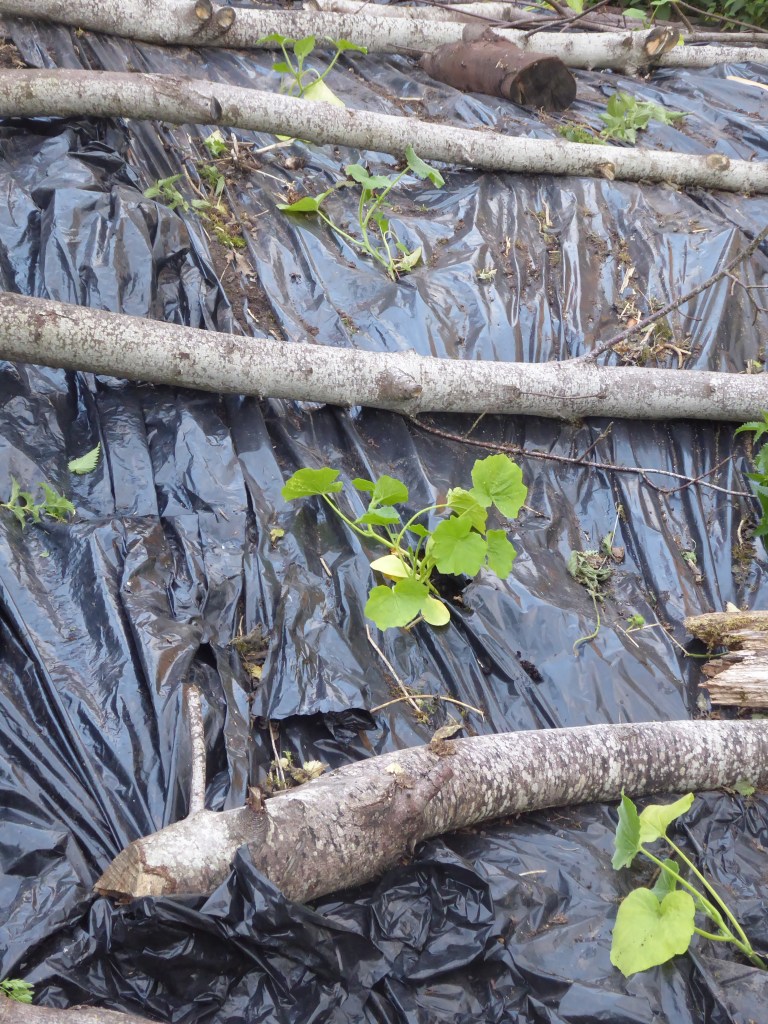

I am a member of the Garden Media Guild and was fortunate in being able to attend a zoom meeting at the end of June where Charles Dowding was the speaker. I asked about this work in progress . Charles did say I was quite late in planting my crop. He was so right ! I counted them up today, and there are just five squash growing.

I am quite satisfied with this though , as the main objective was to rid the nettle growth. Over winter, I intend to roll up the plastic, and put a really deep mulch layer on, and use the plastic elsewhere, to start on another nettle infested area. But next time I will put down a mulch underneath as well.
I intend to carry on writing seasonal blog updates with regards to my continuing development of my no dig garden. Through my fascination about the practicalities of no dig , I feel far more confident, with new knowledge gained by just getting stuck in, and learning as I go along.
I now have a basic understanding of why you don’t need to to dig, why you mulch, and how, what and when you can sow and plant out to grow a wide range of food crops successfully.
The later chapters are concerned with the equally essential subjects of storing, culinary ideas and preserving the crops grown. I will definitely be writing about my new found culinary and preserving skills over the coming months. This book has transformed the way I garden and grow ornamental plants and edible crops. I am really looking forward to many years of growing, preserving and cooking through becoming a no dig gardener.
No Dig Organic Home and Garden is written by Charles Dowding and Stephanie Hafferty and is published by Permanent Publications http://www.permanentpublications.co.uk ISBN 978 1 85623 301 9
Their individual websites are – http://www.charlesdowding.co.uk and http://www.nodighome.co.uk Every possible query you might have is covered.
Charles Dowding has a new publication ” No dig gardening : from weeds to vegetables quickly and easily ” I definitely will be making space for this in my library.
Happy reading, happy gardening and happy no digging !

 Sally Wicks
[…] perennials and annuals. And just like last year, these new raised beds will be looked after in a No Dig […]
LikeLike
[…] year, I started to garden using the no dig method, it really was a resounding success, No Dig . So 2021 finds me no digging again. This area was pure nettles last year. I used plastic sheeting, […]
LikeLike
[…] you are not quite sure what this entails, I have written a number of blogs about its merits – No Dig . The following images are this years successes ! I think there is a cake or two to be made with this […]
LikeLike
[…] think a whole blog series on veg grown in my chosen No Dig . method, might be next years new blog […]
LikeLike
[…] In addition to this , as I garden using the no dig method , I didn’t need to water anything . If you are a little unsure on what no dig is , here is a link to a blog from a few years back . No Dig . […]
LikeLike
[…] I am and have used no dig principles for many years, which will definitely help my garden. If you are not sure what this entails, why not check out this link No Dig . […]
LikeLike