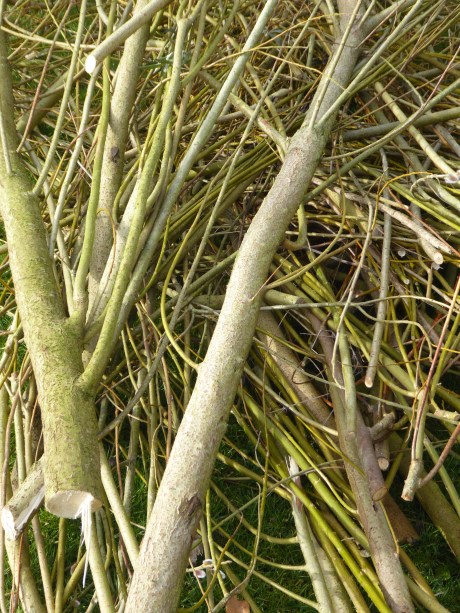

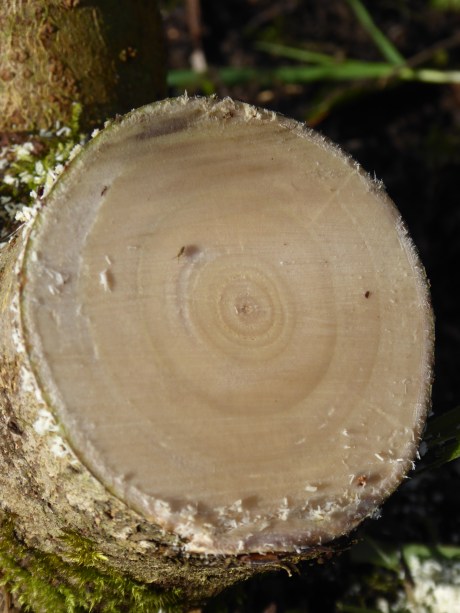
 The willow was in need of renovation. Undecided whether to coppice or pollard I undertook both. February is quite the perfect time to do either, as the sap has not risen and birds have not started nesting.
Coppicing may look quite severe, however, the rate of growth will be vigorous – new growth will reach at least a metre this year.
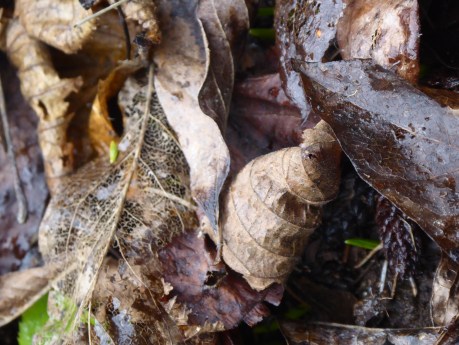
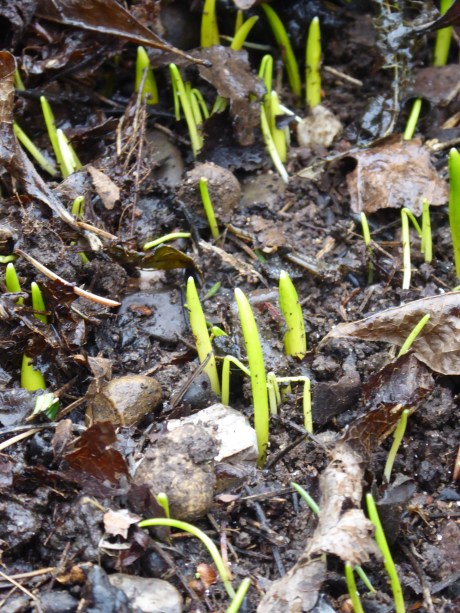
I am feverishly removing spent foliage to reveal the growth tips of bulbs in customers gardens. Spring is definitely on the way !
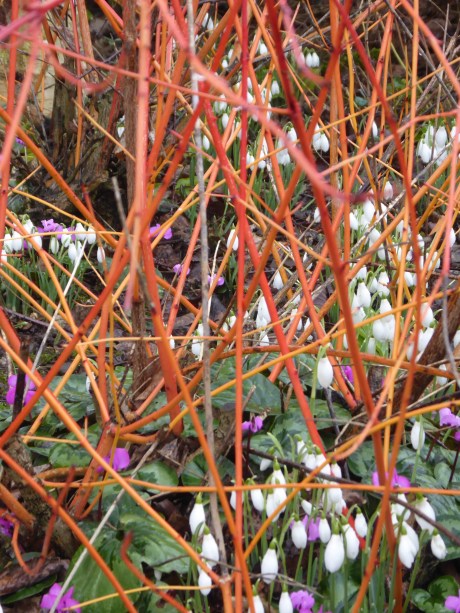
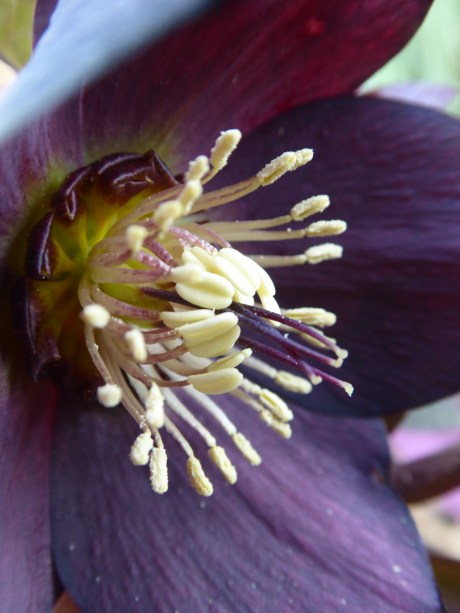
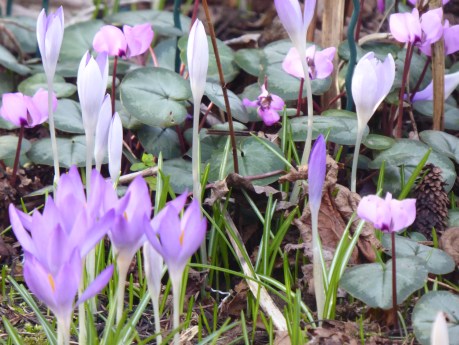 February continues to be wet, cold, windy, muddy, snow and sleet filled. However daily sightings of Hellebores, Crocus, Snowdrops, Cyclamen coum and Cornus Midwinter Fire constantly remind me why I chose to make my career as a gardener.

 Sally Wicks
Oh! That coppice should be dressed up a bit. I mean, it should not have so many stubs. Those green stubs near grade should be cut to the trunk, ant the trunk should be cut below all of those stubs.. New growth will compartmentalize the fewer wounds more efficiently. Next year, or whenever you coppice it again, the growth should be cut back to the original stump, without leaving stubs.
LikeLike
Thanks Tony. I thought in this garden I would try a few combinations,as it is full of cuttings I put in years ago so on the whole they are cut hard back, If I remember there are about 30 willows. This one with all the stubs is moreof an experiment. I am interested to see what it looks like with various heights of new growth. Many thanks. Sally
LikeLiked by 1 person
I wrote this article earlier. The illustration shows English style pollarding, which allows one or two stubs on the knuckles annually, so is different from coppicing. https://tonytomeo.wordpress.com/2018/02/12/pollarding-and-coppicing-pruning-techniques/
LikeLiked by 1 person
Thanks Tony.
LikeLiked by 1 person