I took a plane to Amsterdam, headed to Utrecht and onto Vlinderhof in MaximaPark, as I was attending a course “Piet Oudolf How Does He Do It ? ” As uptil this point, I have instantaneously found myself swept away by the intense beauty of his Superlative “New Perennial movement ” Landscapes, when the opportunity arose to explore them – rather than attempt to analyse the planting design.
I knew this course was going to be a fascinating and practical learning experience ( and it was )
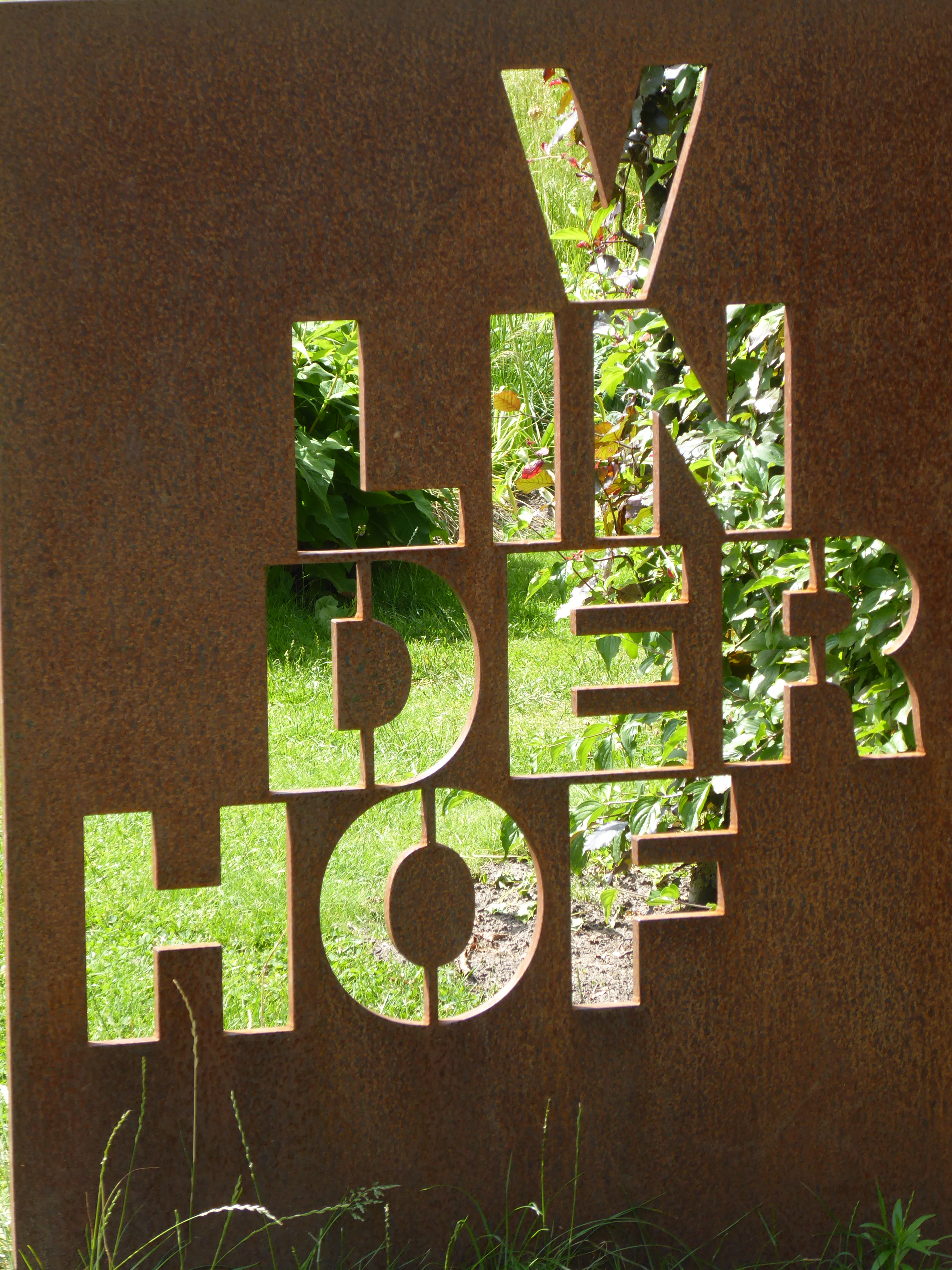
This is a public park, yet feels like a well loved domestic garden. I wonder if this is due to the ongoing care and maintenance, which is lead by Mark Kikkert and a truly dedicated group of 70 volunteers. Vlinderhof is only here due to Mark’s initial idea, and his tireless work ; from inquiries, planning, sourcing the funding, to finally getting it onto site – what an incredible acheivement.
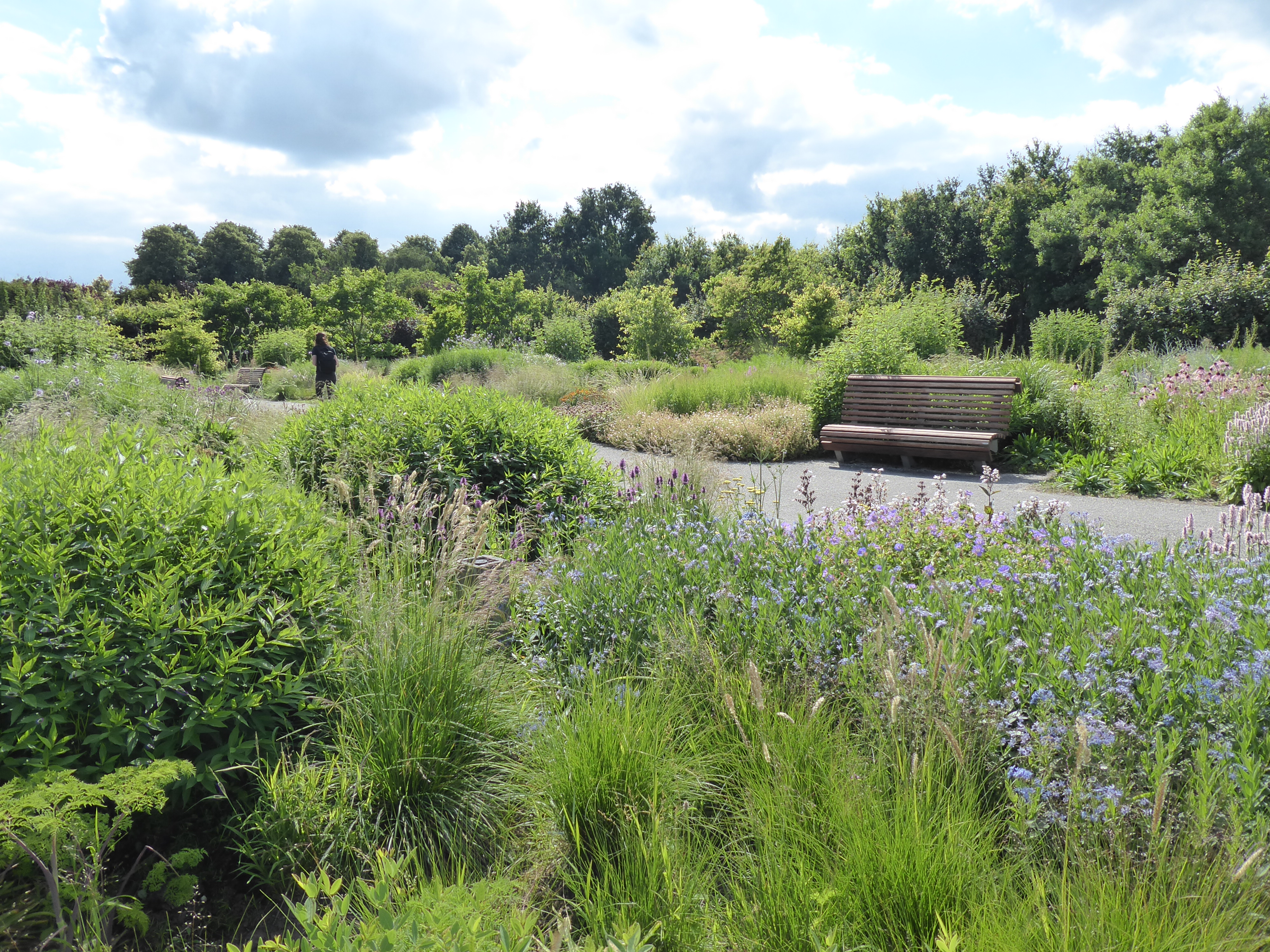
A grass mound provided a perfect view-point to sit and take in the structure and beauty of the place.
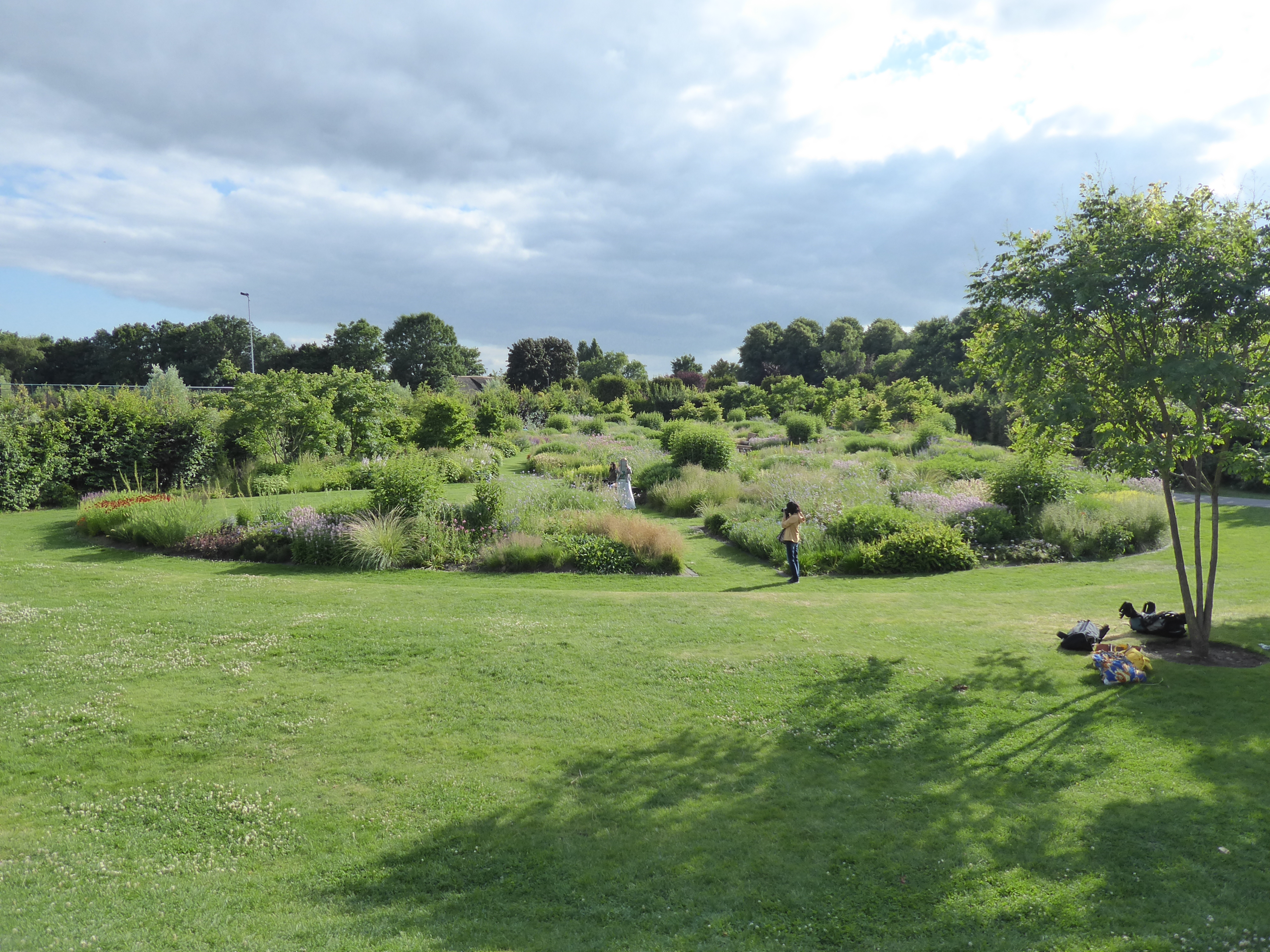
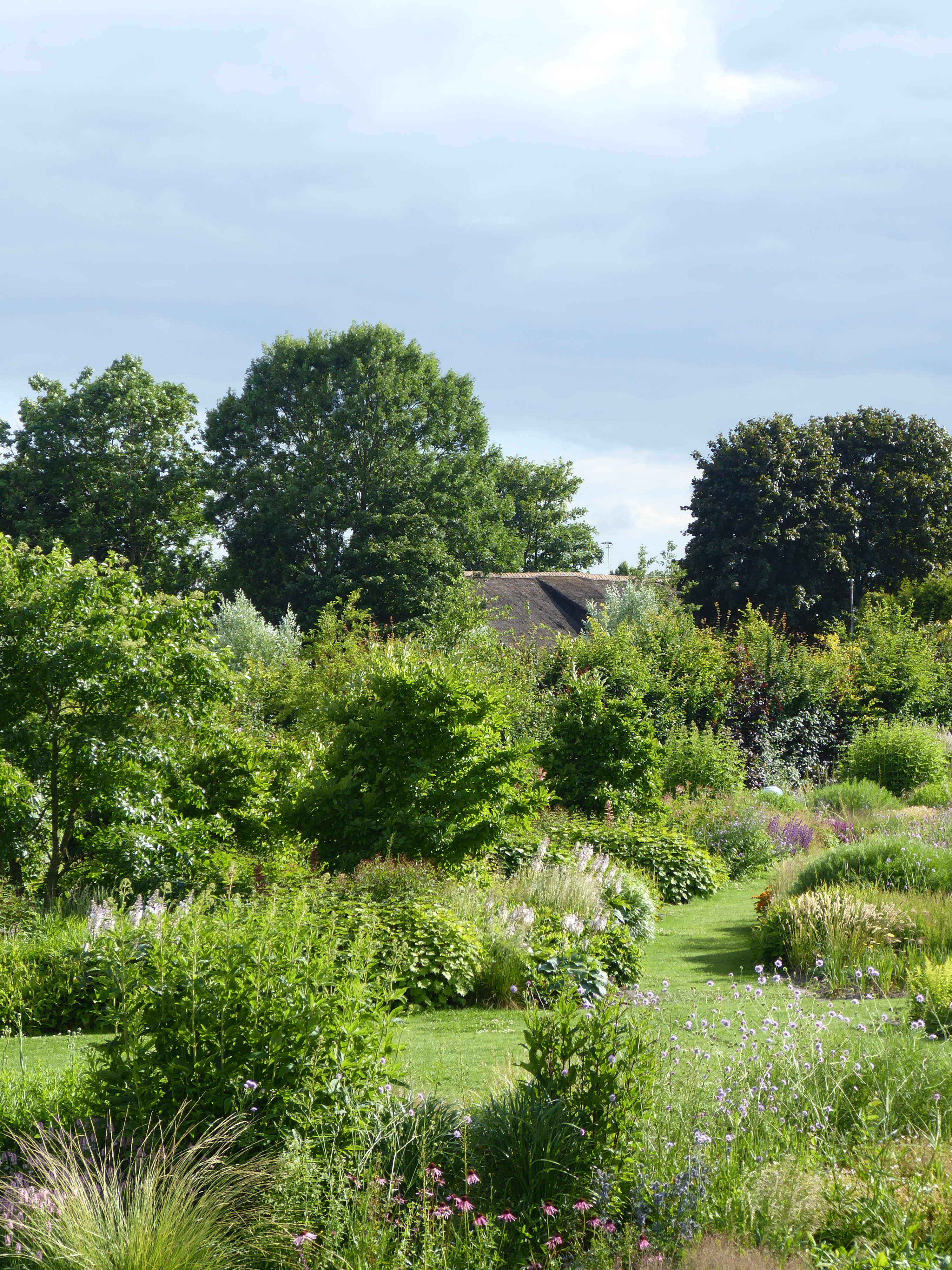


The spatial design provides for a perfectly balanced range of uses,. There are spaces large enough to hold public events and courses, and wide avenues provide the opportunity to stop and take in the planting without causing congestion. The benches were so comfortable; how could you not sit down, relax and talk amidst the planting ?
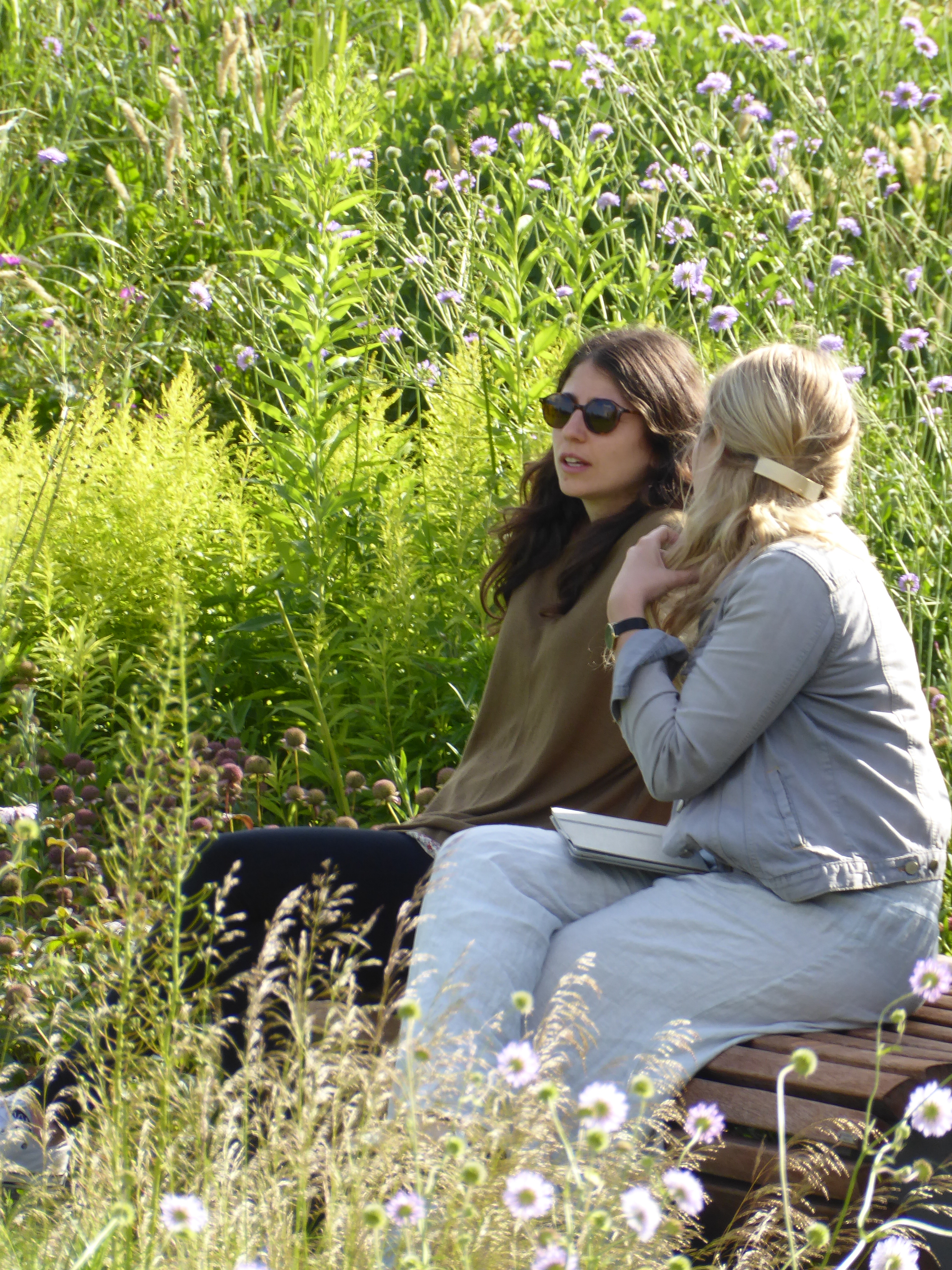
Noel Kingsbury was the course leader. Through his many years of friendship, work and collaboration of published material with Piet Oudolf, he really was the person who could answer our many questions.
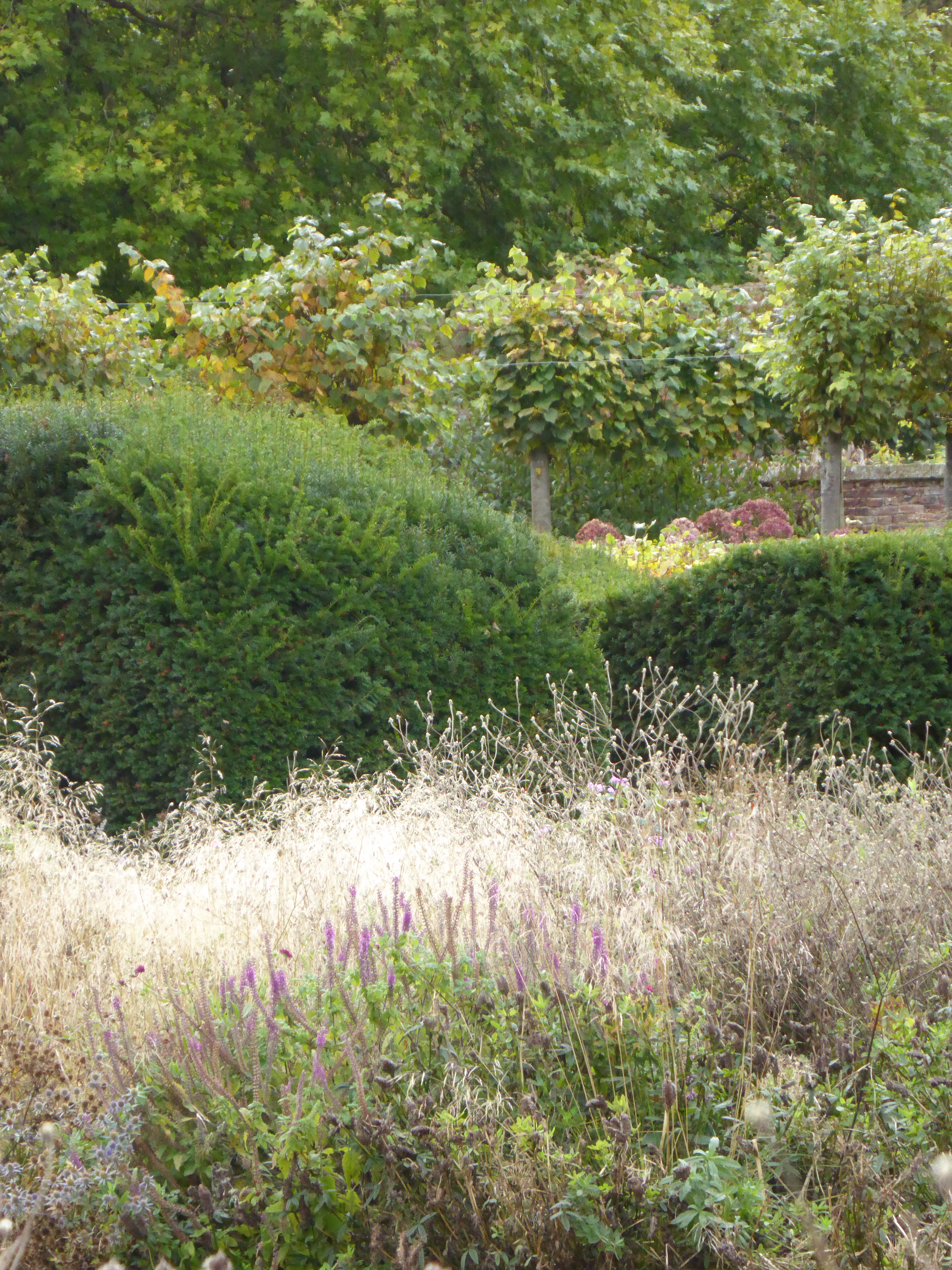
Piet Oudolf’s earlier design work was uniquely identifiable by formally clipped planting material, and large blocks and drifts of single cultivar perennials and grasses. His palette of plants chosen for their stem structure, seed head and winter form, over their flowering capacity. The three images below are from Scampston, designed in 1999. Images taken in 2017.


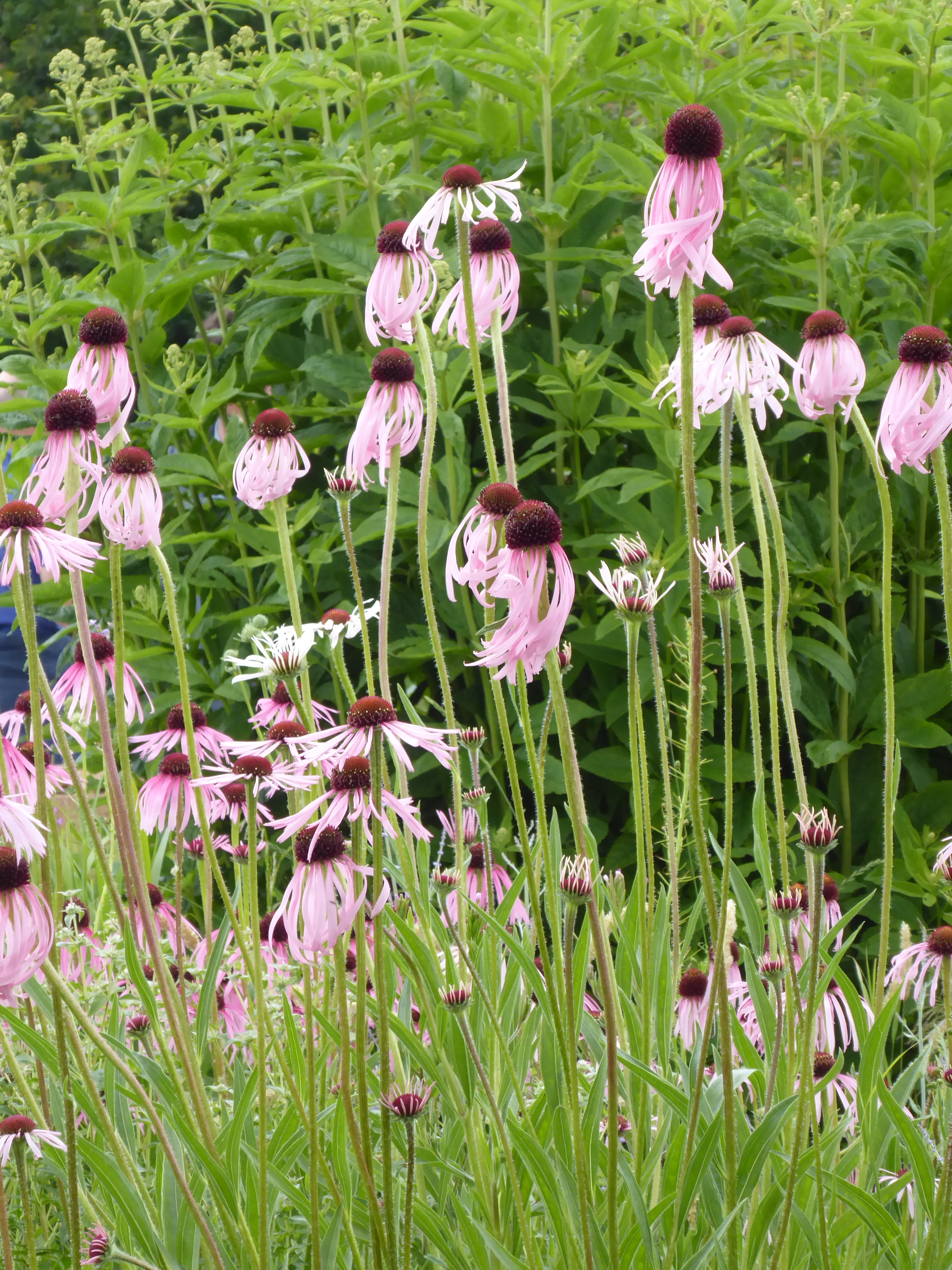
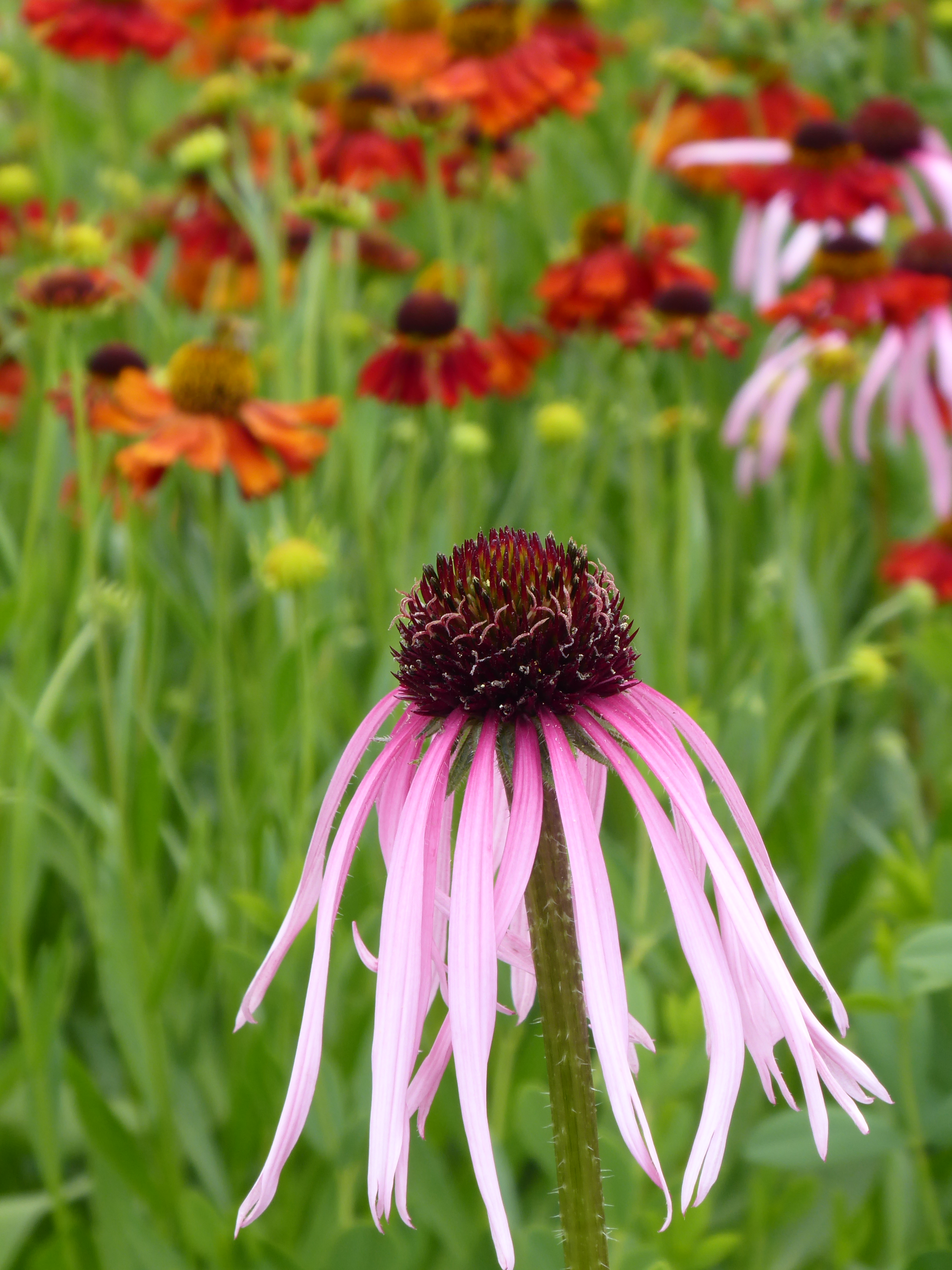
Over time, this has developed to where we see far less formally clipped plant material, and greater use of smaller blocks of exquisitely blended combinations of plants as the image below details. Echinacea pallida, Helenium Rubinzwerg and Aruncus Horatio from Vlinderhof.

I do spend time wondering how Piet Oudolf’s planting combinations will develop in future years. Maybe there will be a greater inclusion of multi stemmed shrubs and trees pruned in a semi transparent manner ? Maybe there will be waist height borders to swish your way through, who knows ? I do know though, that they will be incredibly exciting and innovative.
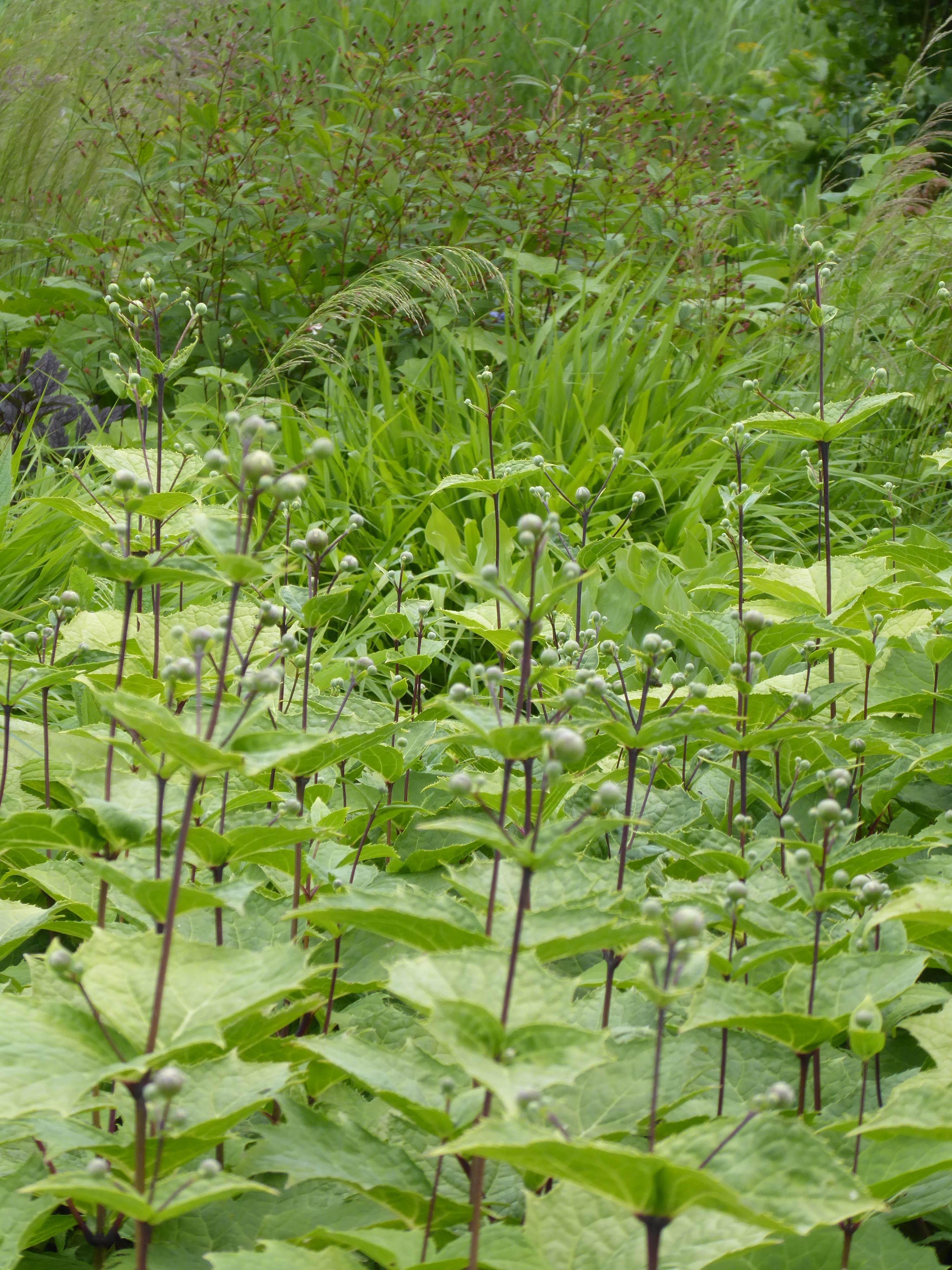
What you see when you visit a Piet Oudolf garden is the original planting design, as he never redevelops a landscape. Plants are in their optimal long term growing spaces right from the outset. For example Kirengeshoma palmata was planted only in certain places. Why ? because as adjacent woody plants mature, they will remove light and moisture from the ground. Kirengeshoma is a dry shade tolerant plant, making it the perfect long term choice. From a distance this perennial possesses a visual sense of a formally clipped plant. Might this be a link back to Piet Oudolf’s earlier design work ?

Discussion, questions, analysis of the planting plans and more discussion was the order of the day. I now have a fundamental knowledge of the key design elements at Vlinderhof.
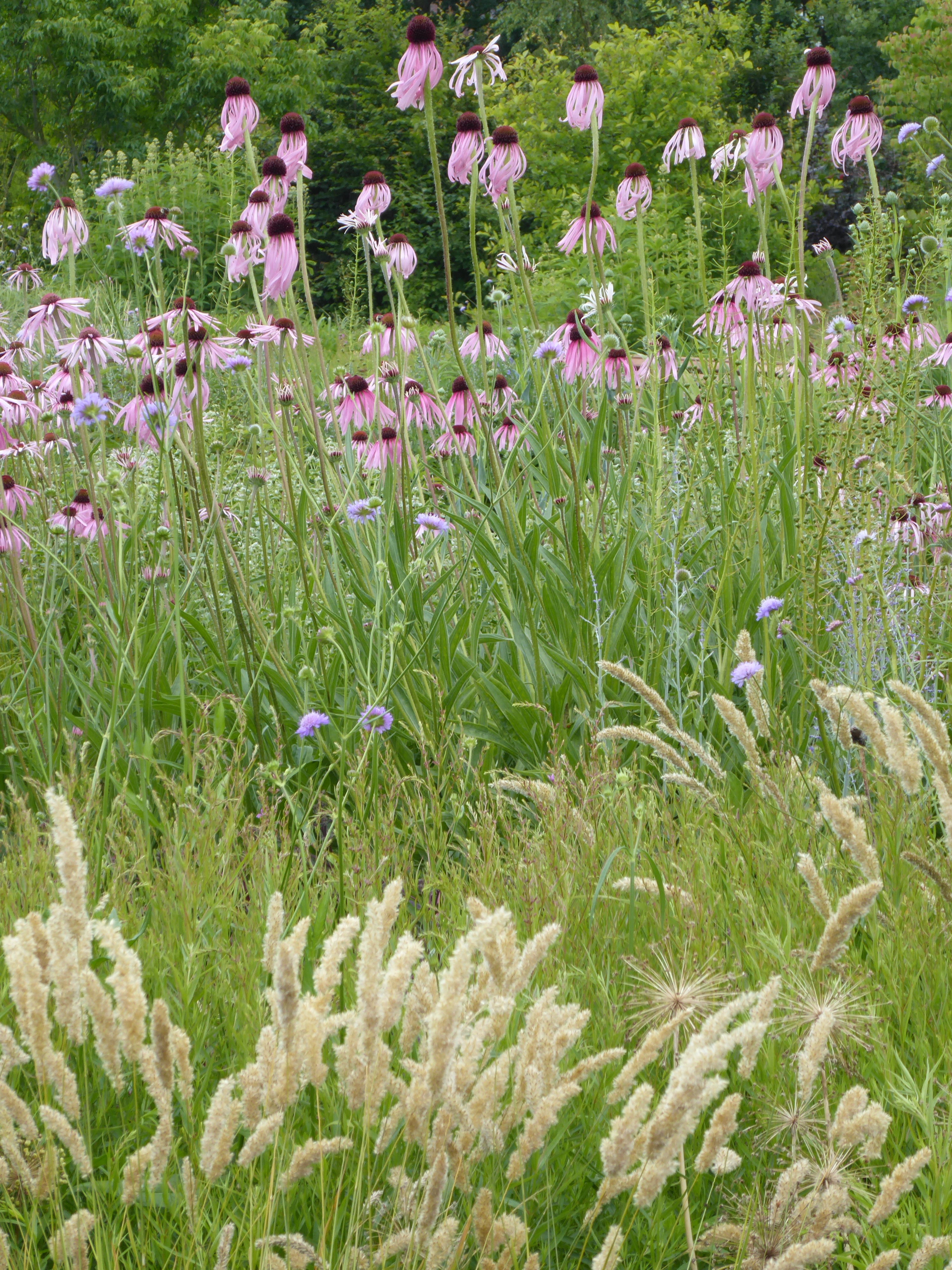
Vlinderhof is an example of block planting – where single species are grouped together in individual blocks.
Through focusing on a plant’s structure, seed head and flower colour the repetition of these blocks throughout the garden provides a visual rhythm which leads the eye through the space. which ultimately creates unity to the overall designed space.
I now understand that block planting is generally one species, however it can be two species, if those plants tolerate each others growth habit.
I already knew that “block” does not refer to rectangular shape, it is a collective word to describe the specific area of a certain planting. (I decided to included this as if you are new to this planting style, you might find this term confusing, and go off on the wrong track !)
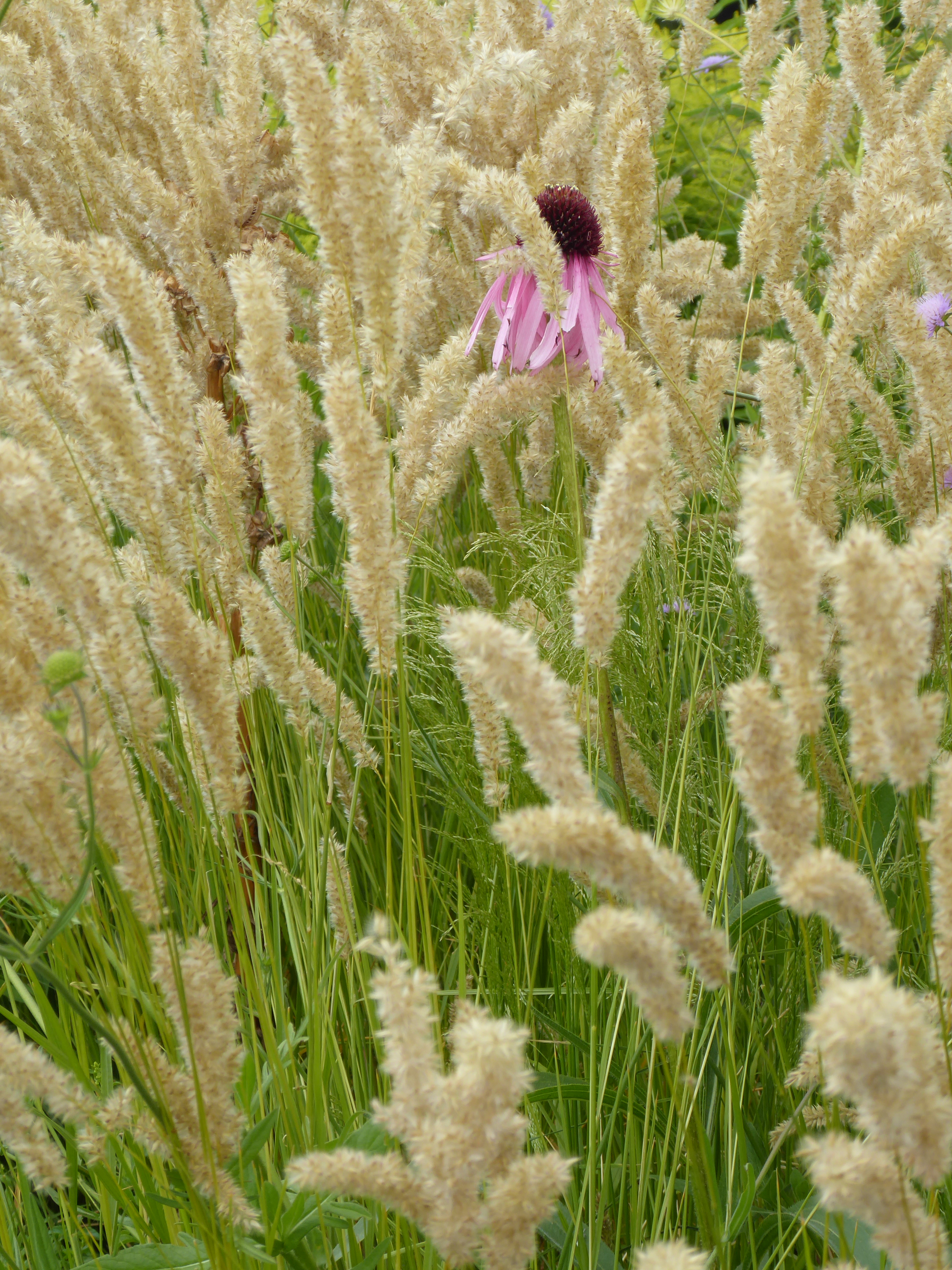
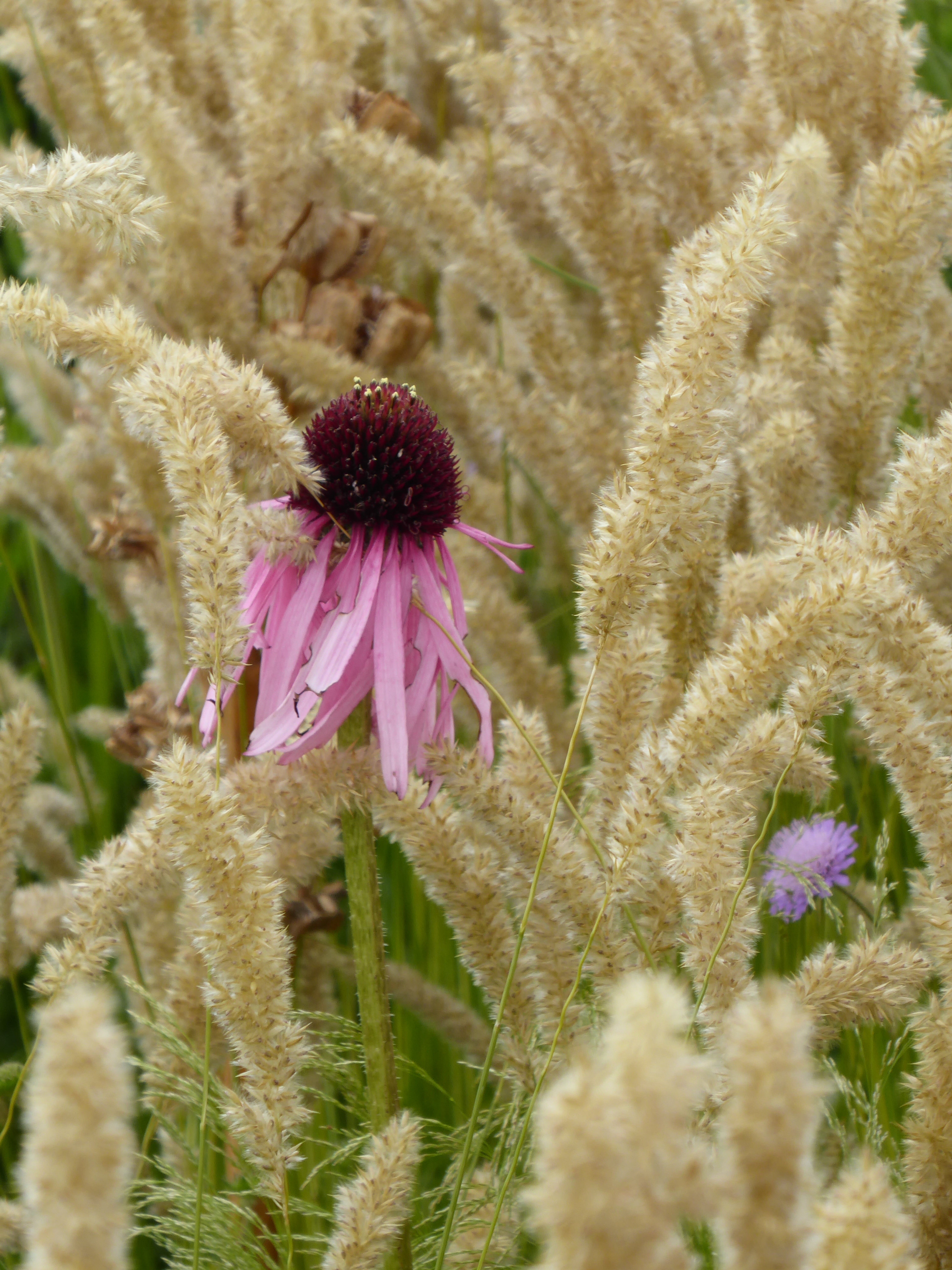
I also understand that individual plants can be interspersed between the main blocks of planting. Image below details Echinacea pallida within Melica ciliata.
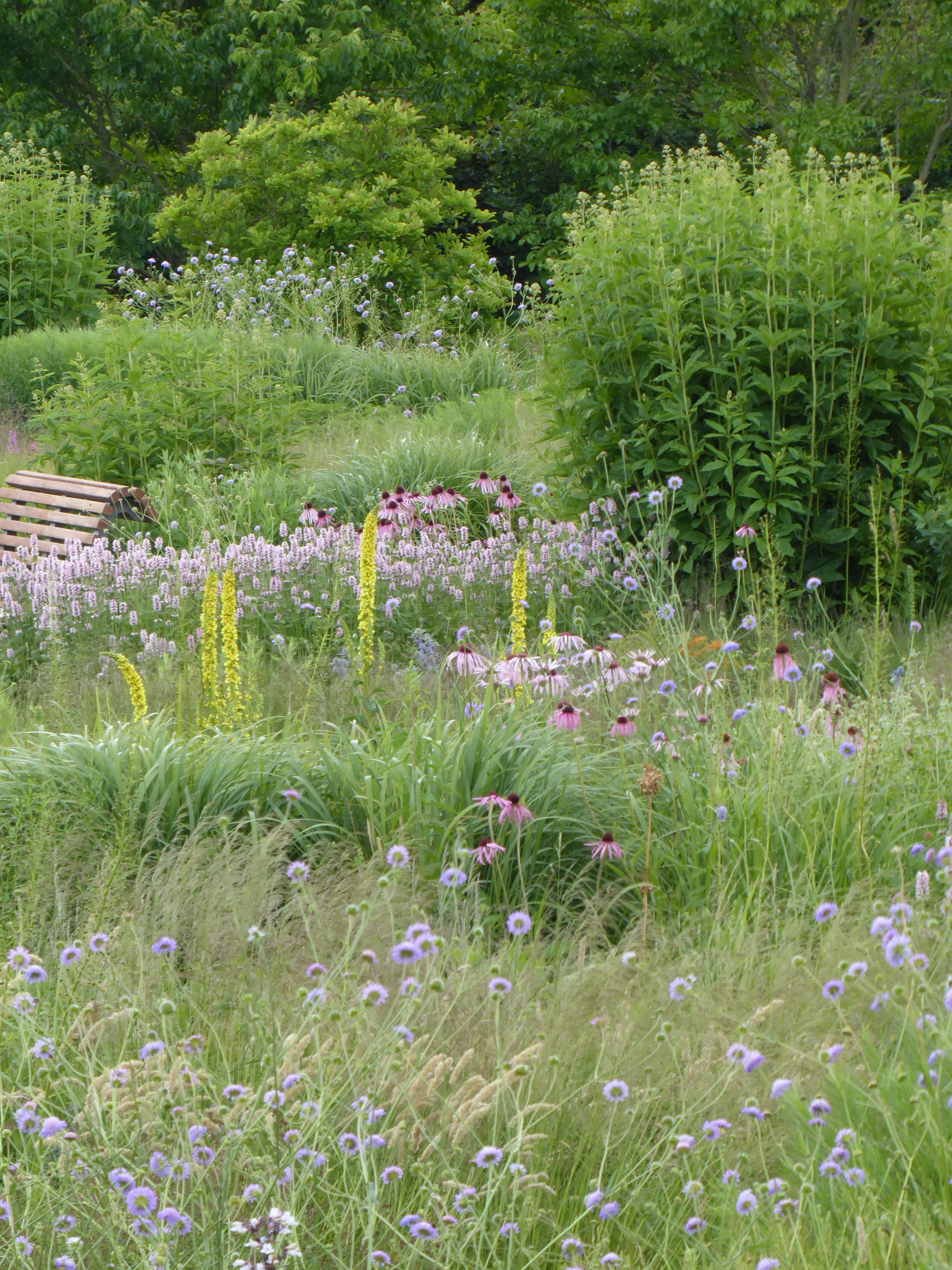
The following image details how all of the above is achieved. The towering Eupatorium Snowball ( which is planted as an individual plant) and drifts of the grass Calamagrotis brachytricha – both provide a strong vertical accent as the seasons progress. Echinacea pallida with its distinctive pale pink petal formation was in many of the borders. I found it was the Echinacea and Eupatorium that drew my attention initially in the garden, and this in turn started to lead my eyes through all the planting beds.

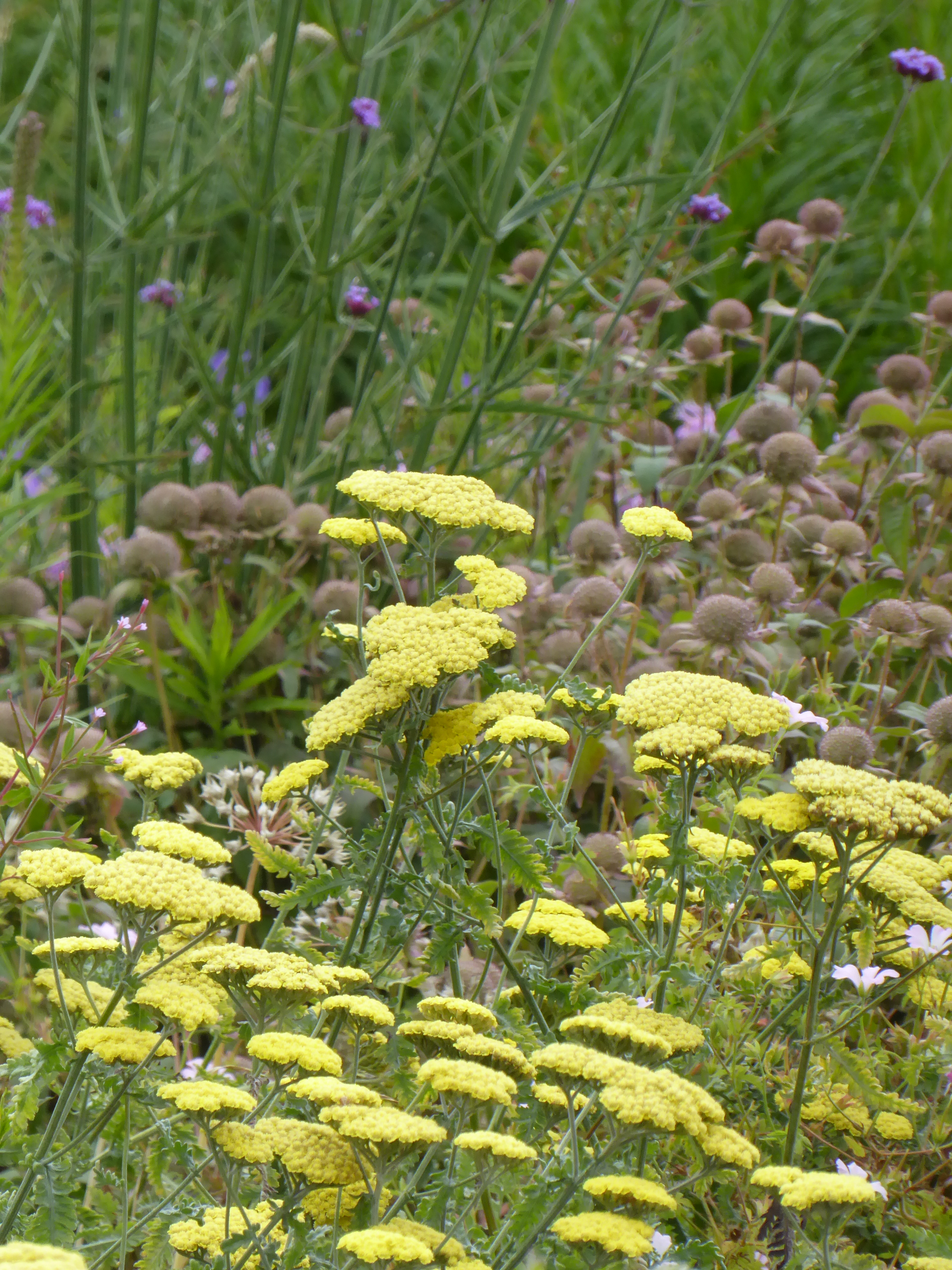
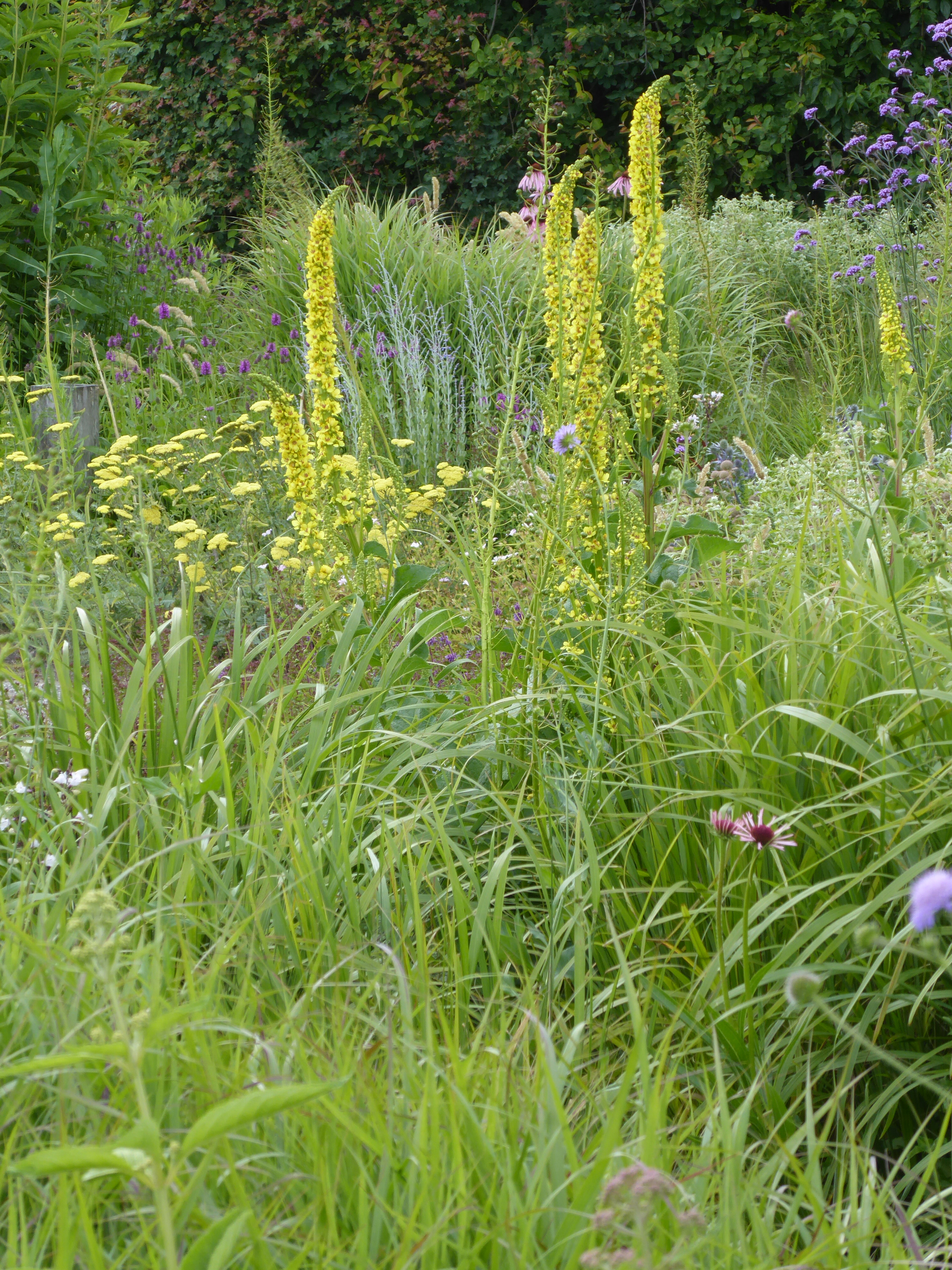
Additional images from Vlinderhof which clearly detail block planting.


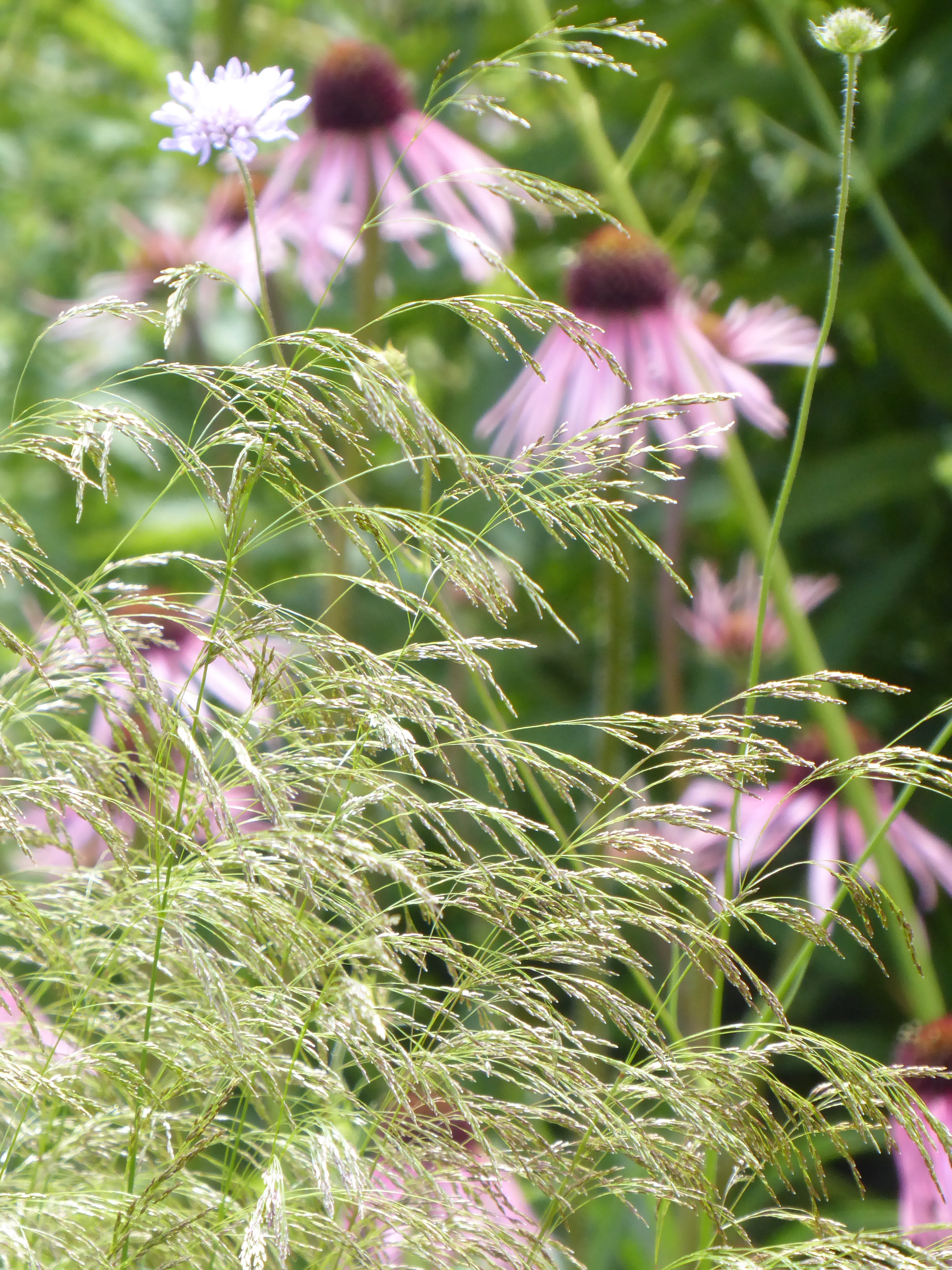
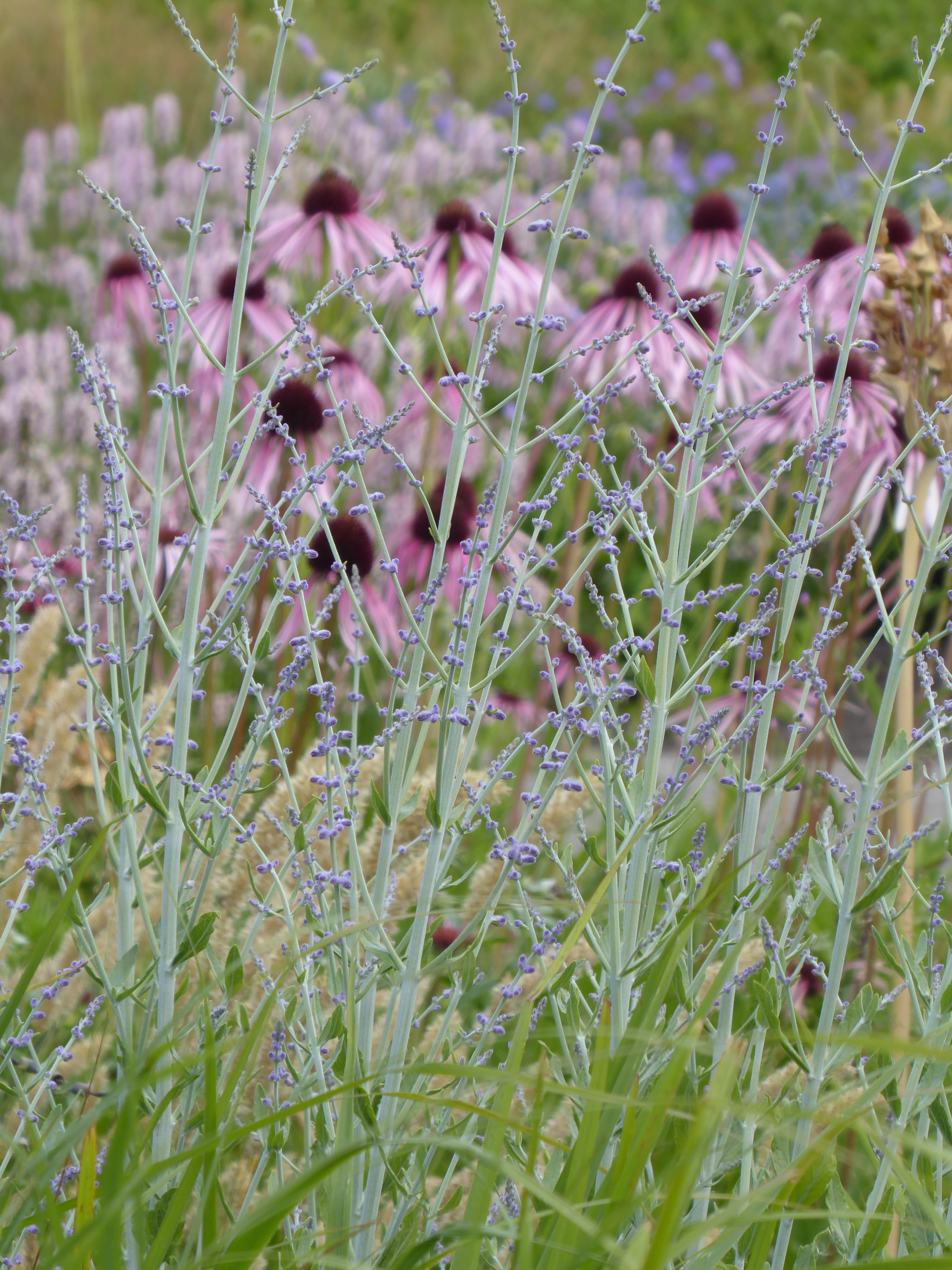
A diffuse and wispy cloud look is a key design element. Around twenty percent of the planting blocks consist of ornamental grasses at Vlinderhof. The slightest breeze creates and sends a fluid and dynamic sense of movement through the entire garden, which links all the blocks of planting together.
Movement of Deschampsis cespitosa Goldau through and around Echinacea pallida
Sporobolus heterolepis is an essential inclusion within the diffuse and cloudy look . Noel’s description was ” This is not a dramatic plant, just a quiet beauty which links the plants together ” Sporobolus can be seen in blocks in the foreground, midground and background of the image below.
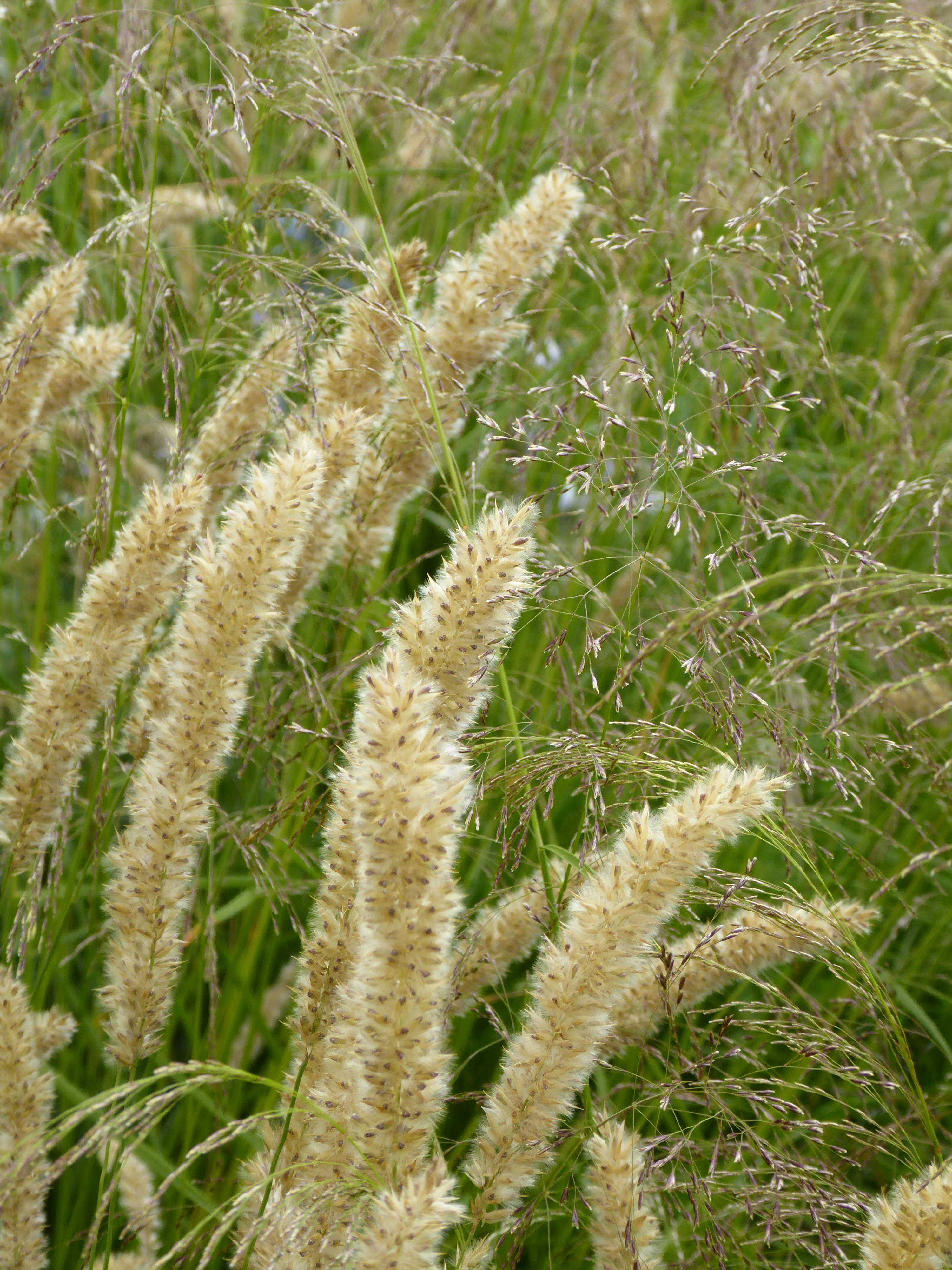
Deschampsia and Melica ciliata combined.
Scatter plants are a key element in a Piet Oudolf design, they possess a brief moment of flowering glory and then disappear. From looking at the planting plans Papaver orientalis Karine would have provided this – however I omitted to take an image. Through analysis of the planting plans the use of seasonal bulbs including Allium Purple Rain, Allium Nigrum, Snowdrops and Dog tooth Violets would be considered as scatter plants. I was there in July, and they were there in late Spring, so apologies for no images.
I now realise all the plants are chosen for their resistance to pest and disease. Vlinderhof is full of resilient, tough and hard working plants, that are also incredibly beautiful.

Plants which self seed freely don’t have a role, as they could alter the characteristic and visual dynamics of the original planting. Plants with the capacity to gently self seed would appear to be accepted, which is exactly what the pale mauve scabious – Knautia arvensis was doing.

Perennials which require staking don’t make it onto the final planting design list. Veronicastrum Diane, which can reach 1.5 metres stood majestically.

From the sublime beauty of a single plant to exquisite combinations, through to the seamless linking of Vlinderhof in its entirity, this is an mesmerizing and dynamic landscape.
Whether you are walking through, viewing from a distance, standing up, sitting or kneeling down to soak up the sense of this garden , it truly is perfect from any angle or distance.
Hopefully my images portray the very essence that is a Piet Oudolf design.


I will always be swept away by Piet Oudolf designs, but now thanks to this excellent workshop I have a greater understanding of his fundamental design principles. I think I will make my next stop, the New York High Line !

 Sally Wicks