Rudbeckia has the tendency to be slightly overlooked in planting schemes, and I often wonder why. Is it down to the late flowering period for the perennial forms, which are undeniably in various shades of yellow ( some say it is too brash) ? Or Is it the need to sow the annual forms (some say it is too time consuming) ? Please allow me to introduce you to the beauty and versatility of this genus.
Rudbeckia.
Consists of over 20 species, and several dozen perennial and annual cultivars, and is a member of the Asteracea family. You may well recognize the common names – cone flowers and Black-eyed Susan.
Remember, Rudbeckias are definitely not all yellow.
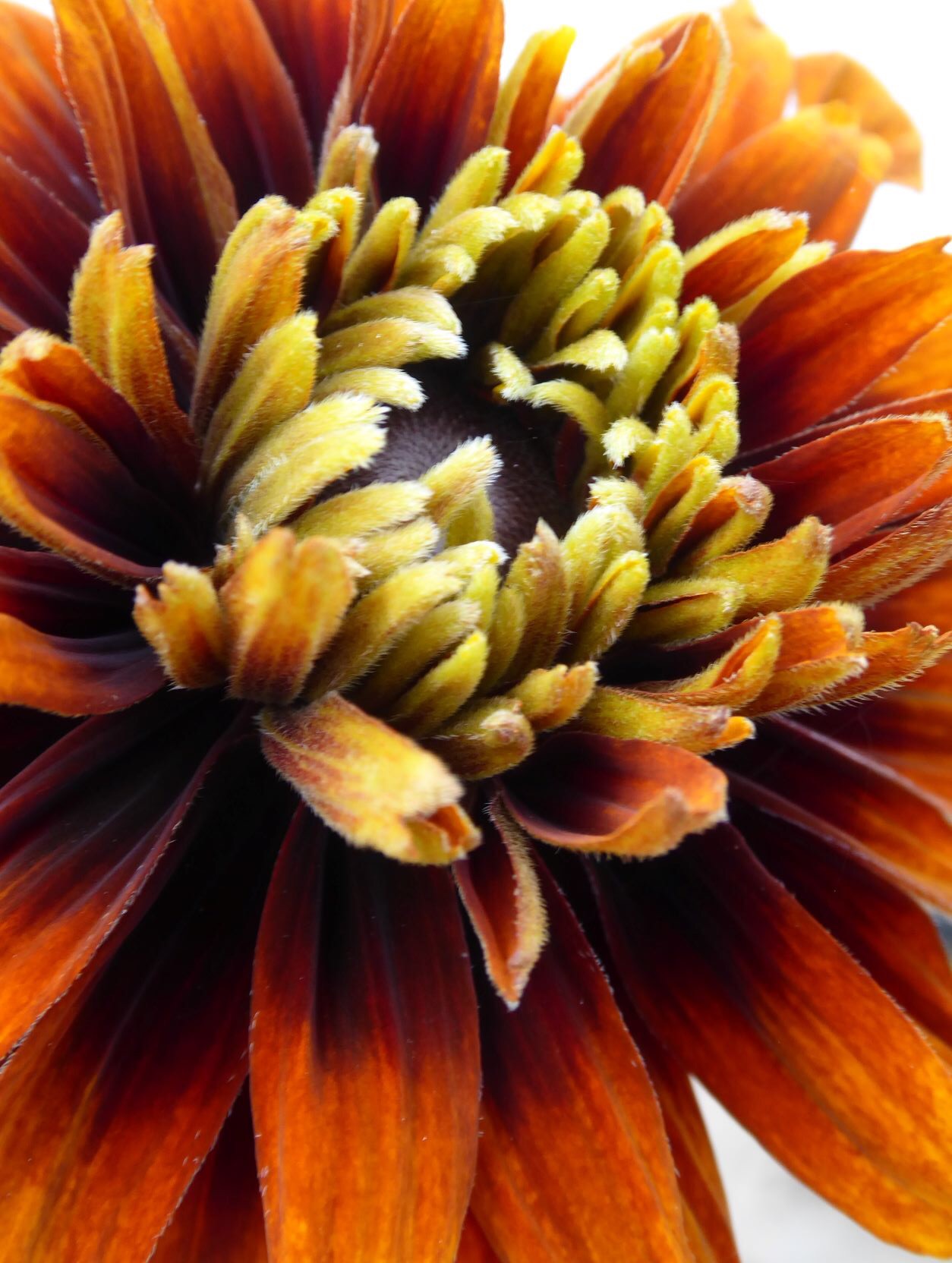


Carl Linnaeus (the creator of the binomial nomenclature system of plant classification) gave the common coneflower its genus – Rudbeckia . This accolade originated from a long term friendship with his patron and mentor Olaf Rudbeck the Younger – a leading Swedish scientist,botanist and lecturer at Uppsala University in the 1700’s.
ORIGIN
From the American dry prairies in the North, to the damp meadows, brook sides and marshland areas in the eastern and central United States.
CULTIVATION
Rudbeckia prefers to grow in full sunshine, they will tolerate dappled light shade, but not dense shade. The growing medium really does need to be moisture retentive though. If sandy or clay based, and bakes dry in the summer, this really can cause stress to the plants health and flowering capacity. If this is the case, aim to create a moisture retentive soil by regularly applying thick mulch layers, throughout the year. This will help towards retaining soil moisture.
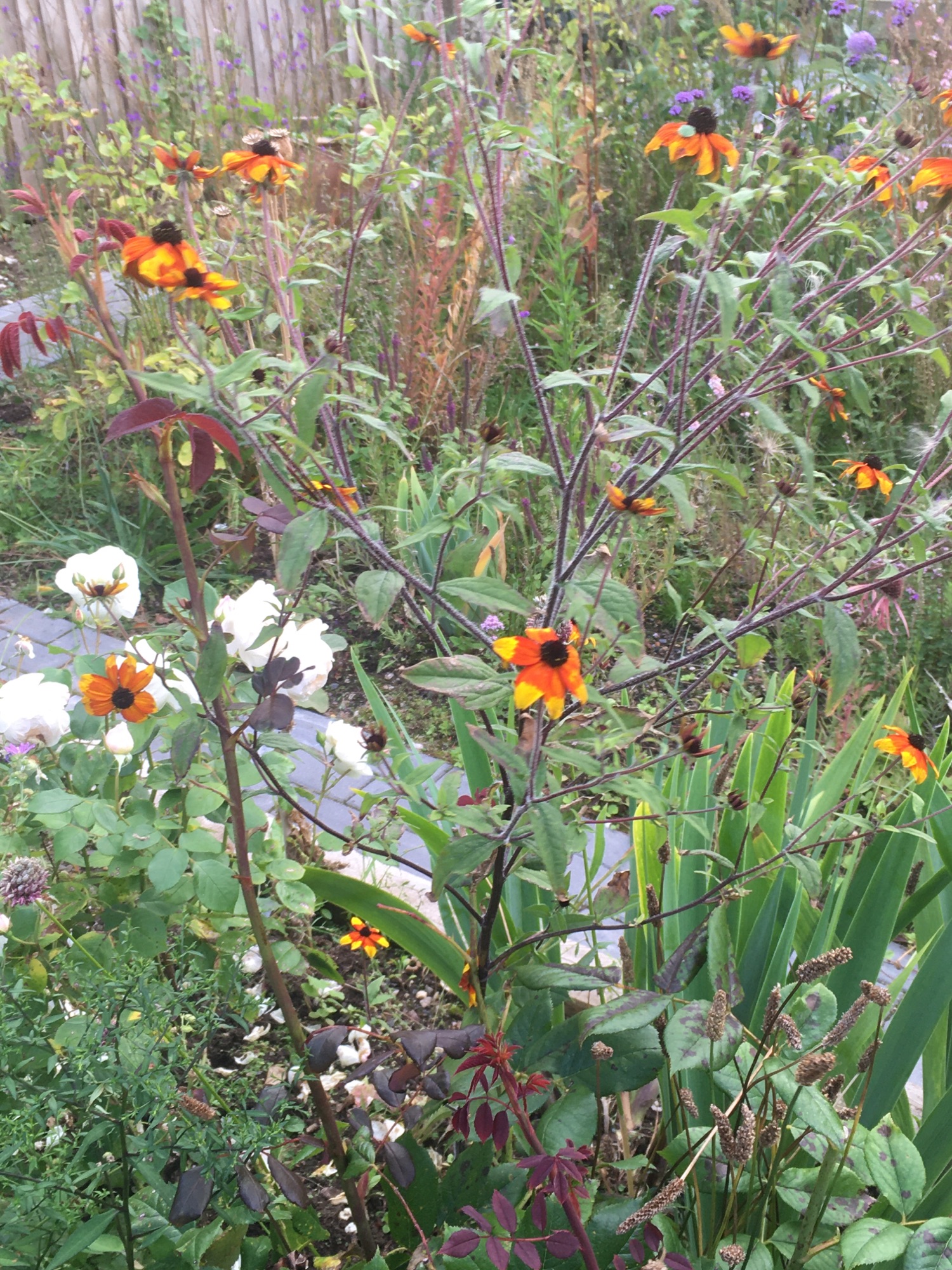
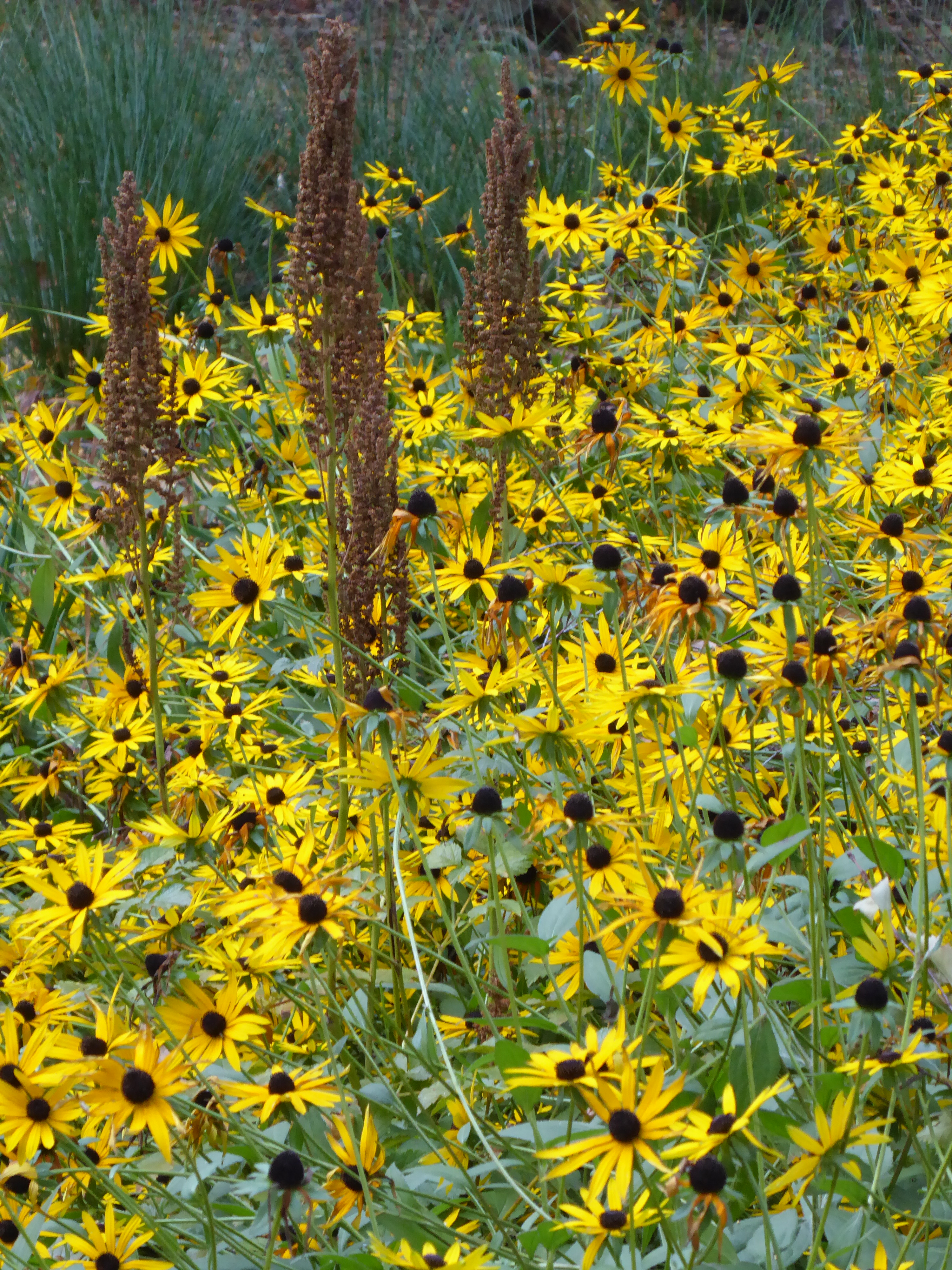
SEASON and DESIGN USE. From mid summer through to the end of autumn, Rudbeckias are reaching their floriferous zenith. Early in the growing season, they really can best be described as green foliage plants, it is worth the wait, so please be patient. Design wise, they can inject colour and height and create spatial enclosures due to some of the taller cultivars. They can be focal points or can lift a autumnal floral arrangement or border design to a sumptuous level . They work really well with ornamental grasses and late flowering asters.





CULTIVATION
Every few years, in either early spring or late summer ( early September at the latest) Perennial Rudbeckia require their rhizomatous root stock dividing. The Propagules can then be literally planted back into the ground, with a good water and mulch.
If growing from seed, sowing from late March /April is recommended, germination takes around 2-3 weeks, if the temperature is approximately 20 C. Once germinated they are straightforward to prick out grow on, and plant out ( after frost )
Sowing from seed, especially if it is saved from your own plants, saves a fortune.

HARDINENESS
Perennial Rudbeckias – are classified as group H4, which means they are hardy plants that tolerate frost to – 10 C
Hardy annual Rudbeckias, may survive mild winters, but it is best to consider them as short lived perennials. It is useful to take note of the species name hirta, as this is associated with annuals/short lived cultivars of Rudbeckia.
ETHNOBOTANY – Owing to its origin as a North American plant, historically poultices were made from the foliage for snake bites, as well as using the leaves as a diuretic. Recent research studies are starting to reveal that Rudbeckia is exhibiting antioxidant, and antitumor properties, which may provide a basis for medicinal potential in the future..
PEST AND DISEASE
Slugs and snails can cause damage to fresh vegetative growth – particularly on Rudbeckia maxima, where the glaucous blue foliage can be shredded by unwanted molluscs. A really good depth of sharp gravel mulch is worth pursuing if this is the case.
They are also considered to be rabbit and deer tolerant – always useful to know.
WILDLIFE BENEFITS
Leaving stems and seedheads in place over winter, provides perfect food, particulalry for Goldfinches. In the growing season, single flowered Rudbeckias are good pollinators for hoverflies and bees.
FIVE OF THE BEST.
From propagation and planting experience the following are my top five.
Rudbeckia maxima – Superb glaucous blue foliage, with a wiry stem that easily reaches 2.5 metres, which combined with the central black central cone and its floret of yellow petals, makes this a remarkably architectural plant to look out for.

Rudbeckia laciniata ‘Herbstonne’ Coming in at over 8 ft in height makes it multifunctional. From creating a screen, or summer enclosure, to being a focal point in its own right, to blends really well with ornamental grasses, particulalry Calamagrotis x acutifolia ‘Karl Foerster’
Rudbeckia hirta Chim Chiminee. A hardy annual, grown from seed. In a sheltered position, on a mild winter, it can just about reach into a second year, but it is best to treat it as an annual. Fabulous quilled petals, make it an annual of great curiosity to many. Try growing it.

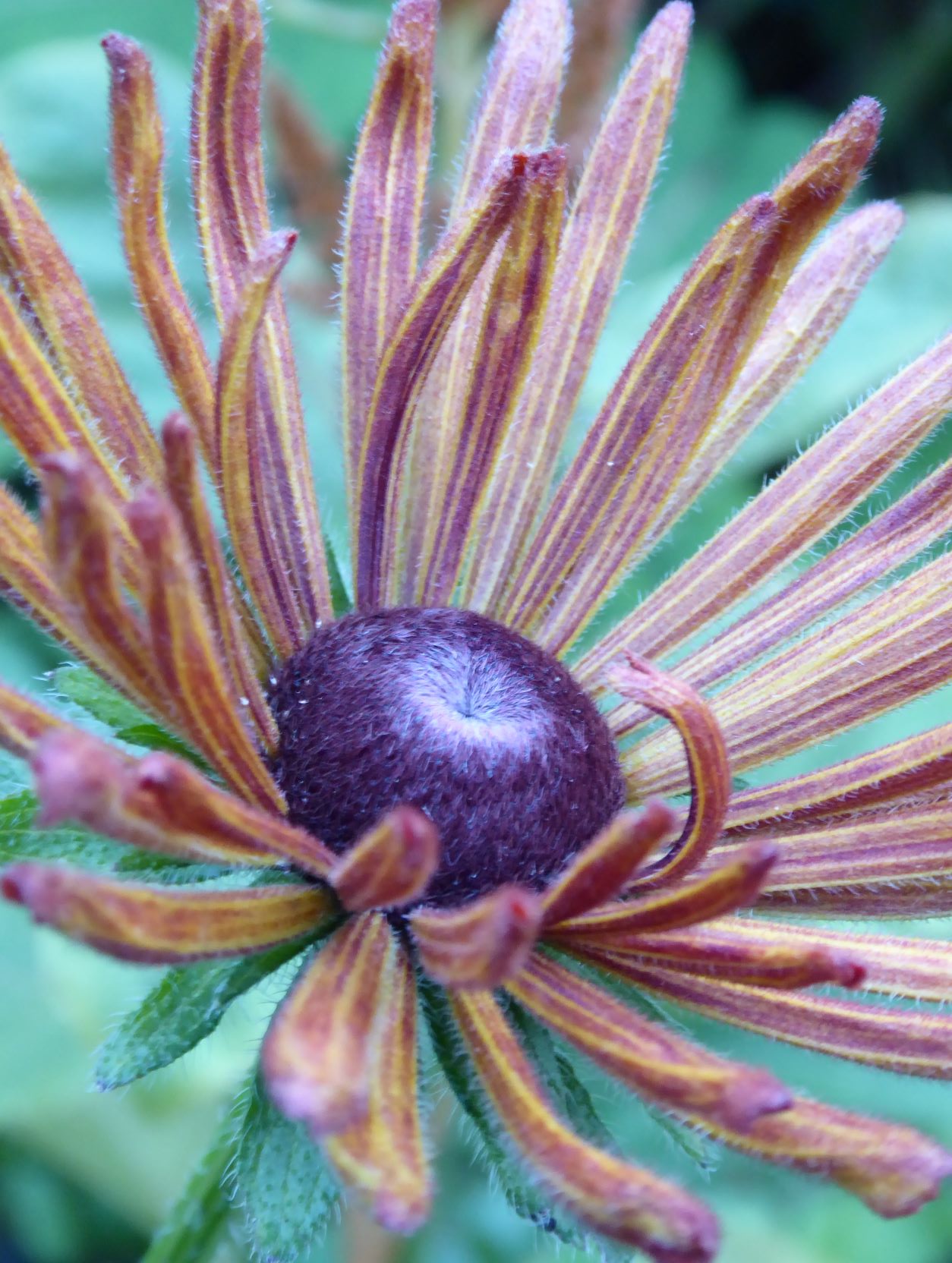
Rudbeckia hirta Sahara – an entirely sumptuous annual, try to grow it ever year if you have the opportunity. Approximately 2 ft in height, works really well with Persicaria alba and Carex testacea.


Rudbeckia hirta Prarie Sun – Considered as a tender perennial, so best to grow on an annual basis. Branched stems reach to around 4-5 ft in height, with a multitude of small flowers which change in colour over time, from orange with a yellow tip to blazing orange – looks fantastic with electric blue of anchusa, and against the yellow autumnal foliage of Amsonia orientalis. One to grow.


Rudbeckia can (and does) provide unique luxuriant colours, that we should embrace for our gardens. And yes, yellow is also a great colour that we need to embrace more when planting.
And finally, when growing about 15 different cultivars of annuals for a trial, I managed to dislodge many of the plant labels, when removing the fleece. What a disaster, hundreds of seedlings all looking the same, which lead to an early end of the project. The moral of this sorry tale, take care with your fleece.

 Sally Wicks