Umbellifers are members of the Apiaceae family. The images below are a clear way to visually identify a plant as an umbellifer. As you can see a mass of tiny flowers are held on individual stems, which all come from a single point. (each stem of flowers is referred to as an umbel) They will form either a flat topped or domed flower head. And this is the flower structure for all umbellifers.
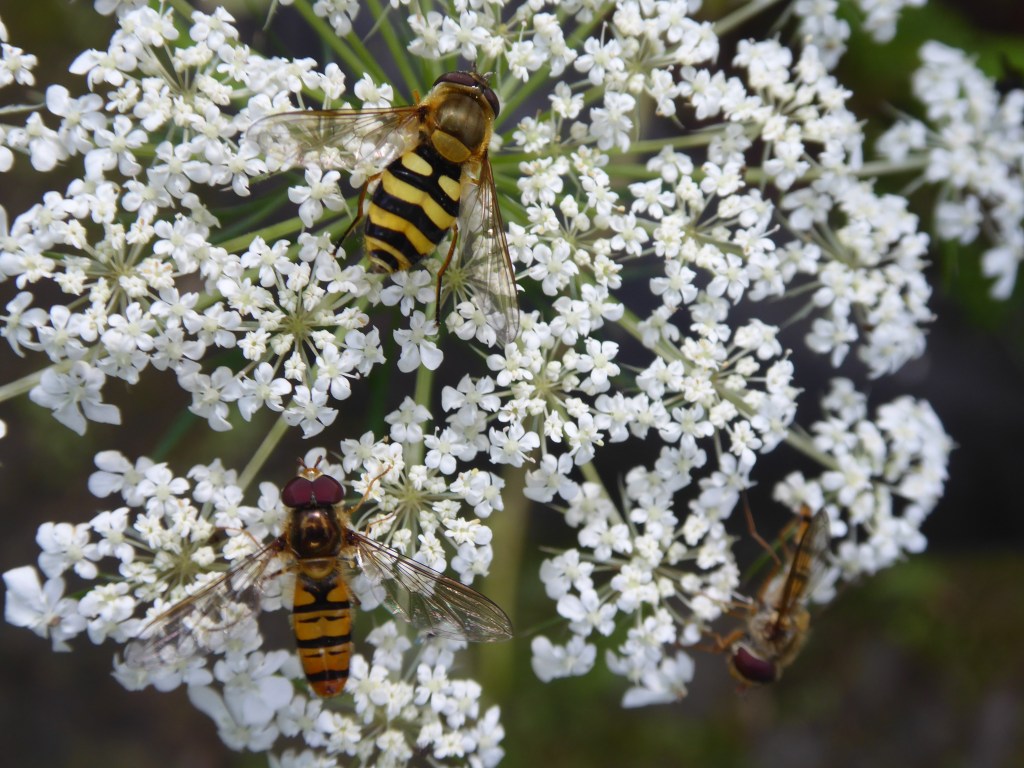
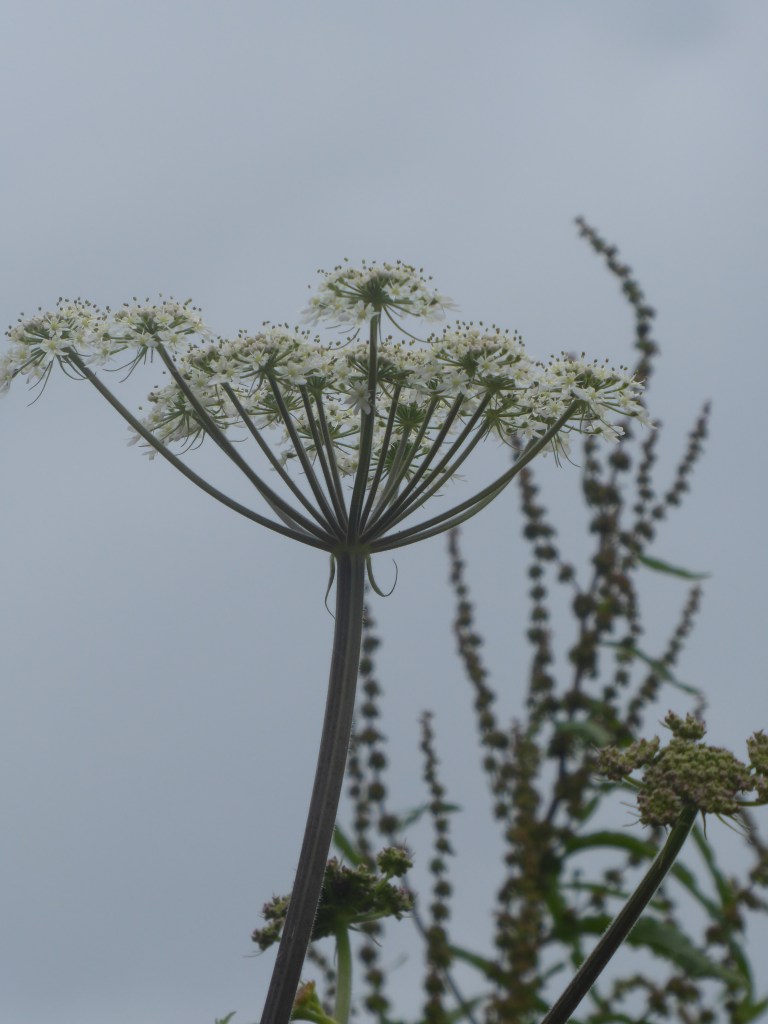
Owing to their nectar qualities umbellifers are some of the most important flowers for attracting hover flies and moths to aid with pollination.
If asked to name an umbellifer a fair few of us might come up with a few possible plants. Fennel, Astrantia and Angelica might well be on your list, and you would be correct. The following two might not be on your list, but they should be !
Every fortnight at work we are set a homework task to read up on plants that grow in the gardens at Wildegoose nursery ( http://www.wildegoosenursery.co.uk) Studying an individual plant, is a really good way to learn how its characteristics relate to its given family grouping and genus. The following two umbellifers were recent homework .
There is now a new page on the blog specifically for “interesting plants “.
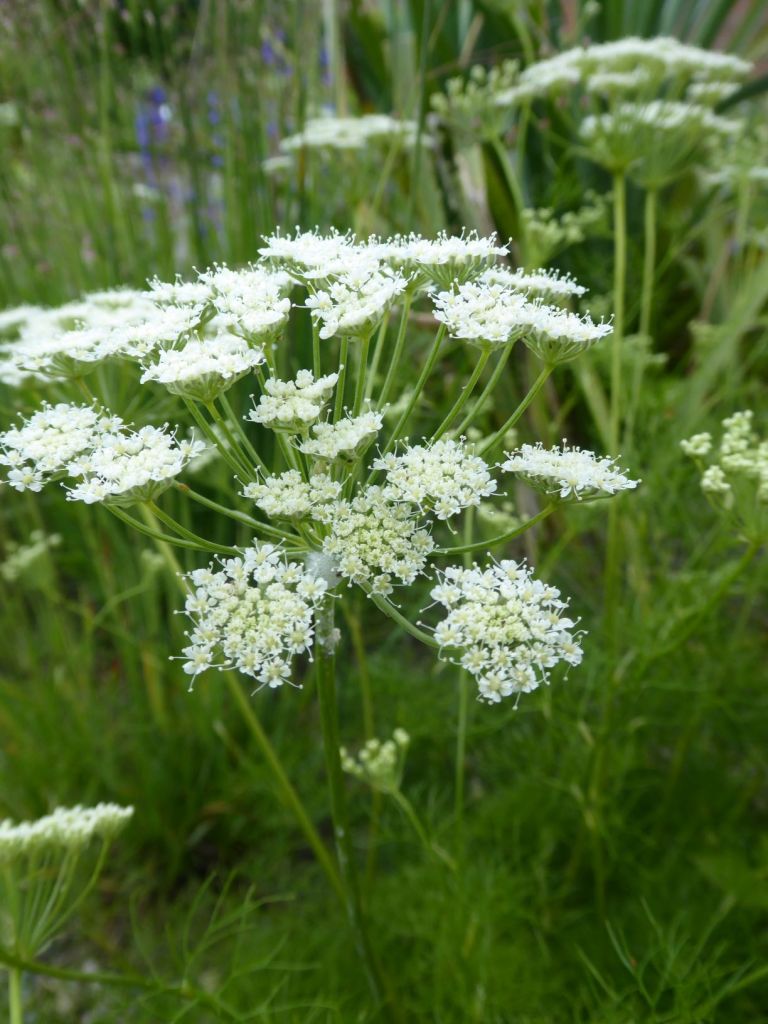
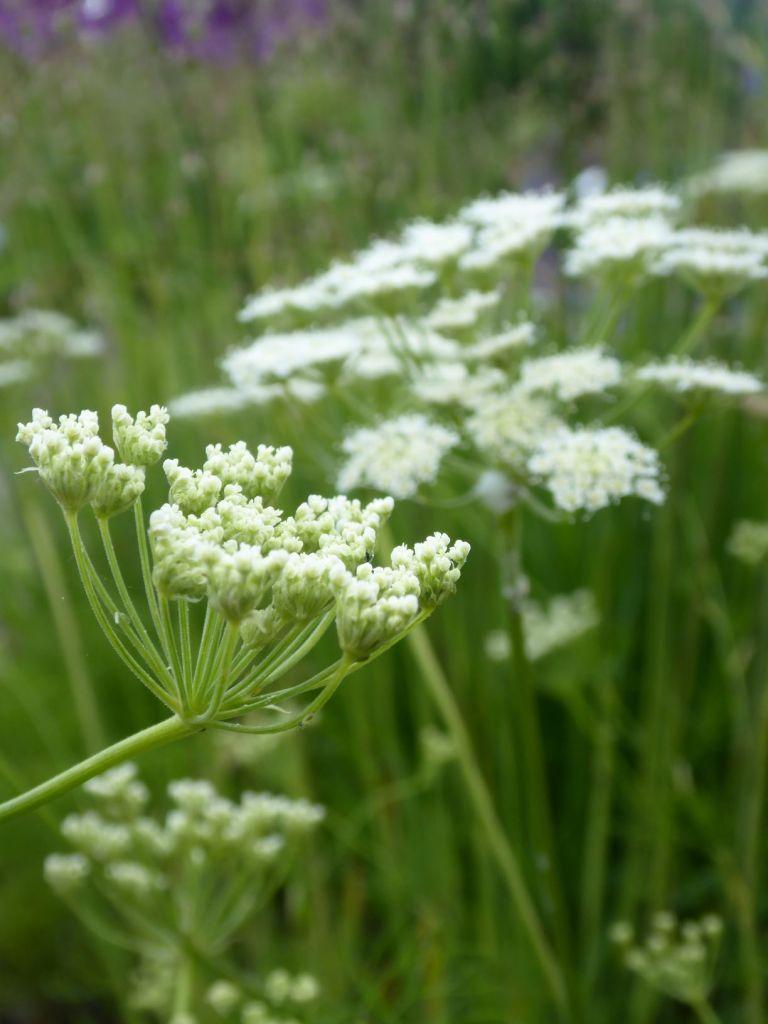
Meum athamanticum
Genus – Meum
Species – athamanticum
Family – Apiaceae
Description – This elegant summer flowering umbellifer has the common names of Spignel or bearwort, The foliage is delicate and feathery, and is sweetly aromatic . Within a couple of years it should reach a height and spread of approximately 50 cm The stems are hollow, which provide a perfect place for overwintering insects.
Cultivation – This umbellifer prefers a calcareous soil (alkaline) , but it will tolerate most soil types as long as they are moist but well drained. Meum athamanticum prefers a sunny position in which to grow , but will also tolerate part shade .
Distribution – It is found growing naturally on mountainous limestone grasslands in Western and Central Europe. It is found relatively rarely growing natively in the UK , but can occasionally be found in Northern Britain and South and Central Scotland.
Propagation – Sow freshly collected ripe seed in autumn, in peat free compost, and top with gravel and leave outside overwinter to break the dormancy , germination is in spring.
Pest and Disease – Watch out for slugs and snails. It is generally considered to be disease free.
Athamantha turbith
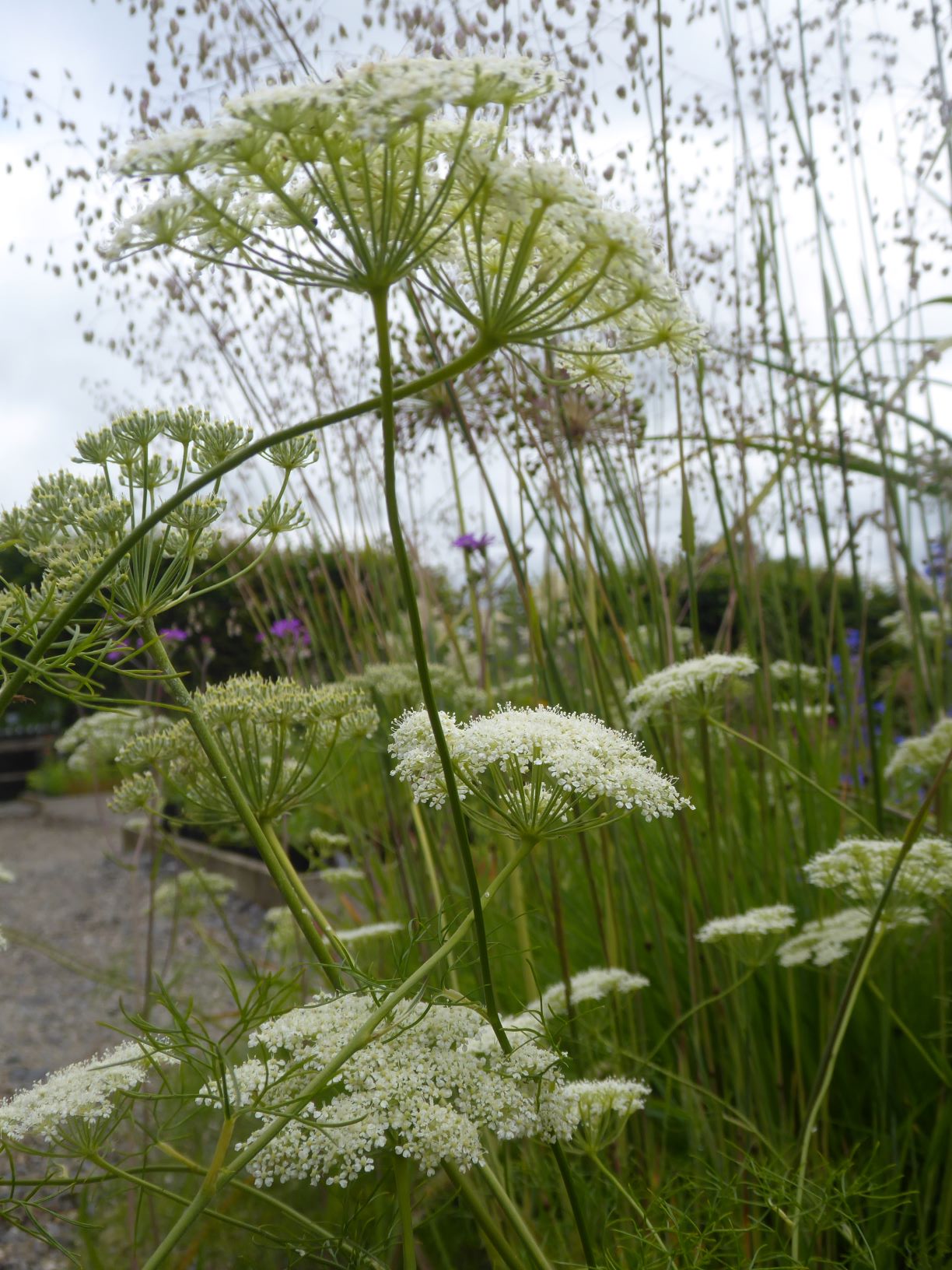
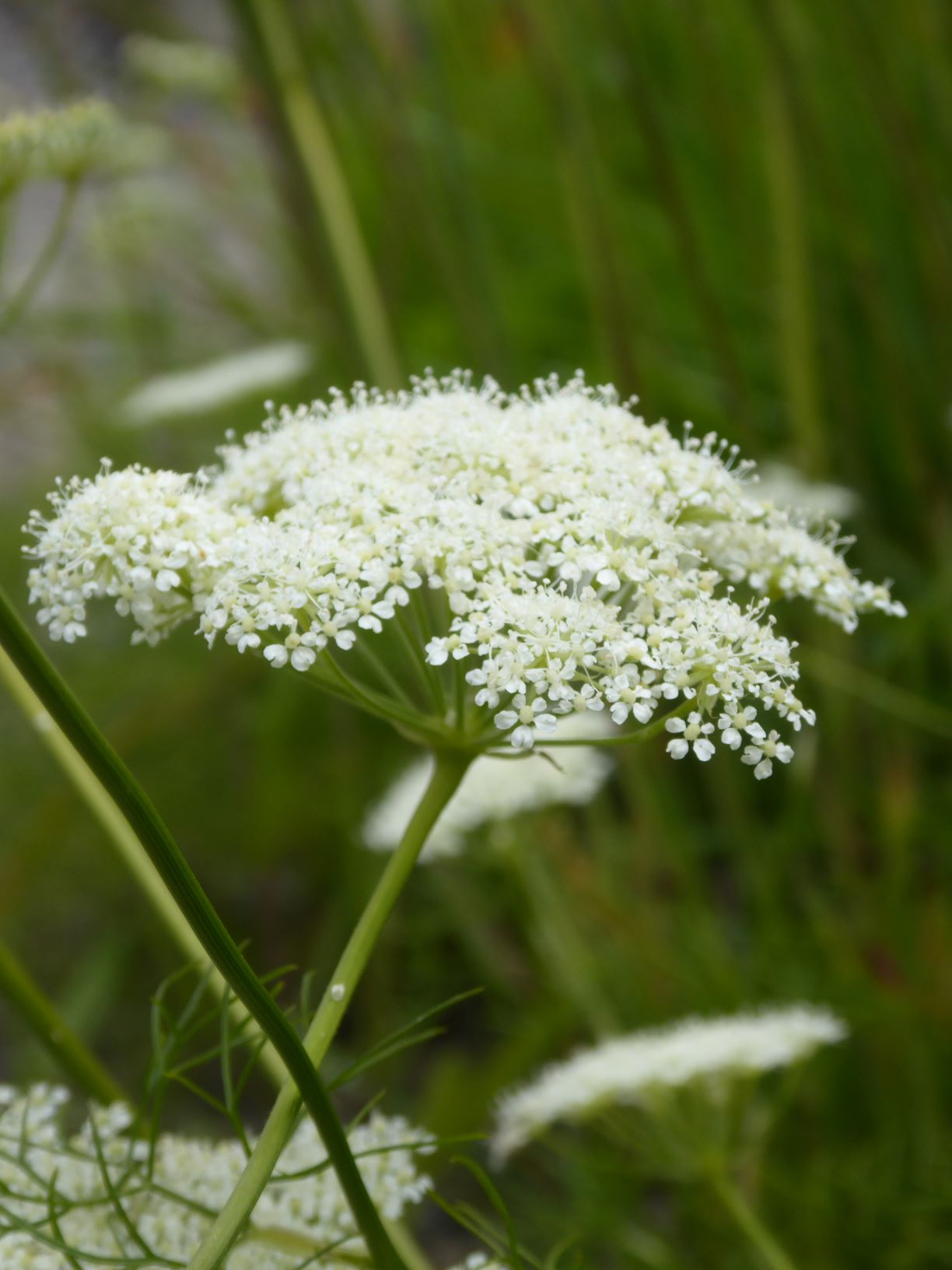
Genus Athamantha
Species turbis
Family Apiacaea
Description . This hardy mound forming perennial also goes by the common name of Candy Carrot, With its Aparagus like bright green fern foliage, and stunning dense white umbels this is definitely a flower that draws attention to itself, both in the garden, and as a cut flower.
Given the opportunity, this perennial, will gently seed around your garden, and it is also highly attractive to bees, who love the nectar produced. Over the summer months a mass of tiny star shaped white flowers are on show. Just remember to dead head regularly to keep the flowers flowing ! They look stunning en masse, or they can be interwoven with perennials including Nepeta nuda and Salvia Dear Anja for a naturalistic planting design. This perennial will reach approx 50 cm and spread to around 30 cm on its maturity.
Distribution – It is endemic to Southern Europe and North Africa
Cultivation This plant requires full sun to survive .
Propagation – collect ripe seed in autumn, and to break dormancy this seed requires overwintering outside. Sow into a free draining peat free medium, and top off with fine horticultural grit , which helps to keep the seed in place . Due to having a tap root, It is recommend, when pricking out and potting, to use a deep container, as it really does not like having its roots disturbed.
Pest and Disease – Generally pest and disease free, but watch out for slugs and snails !

 Sally Wicks